Melanotan-2 (MT-2) Research Guide: Melanocortin Pathway and Pigmentation Science
A research-focused guide to Melanotan-2 (MT-2), the non-selective melanocortin agonist used to study melanogenesis and receptor pharmacology. Covers mechanism, key findings, how it compares to Melanotan-1 (afamelanotide), quality verification, and sourcing for global pigmentation researchers.
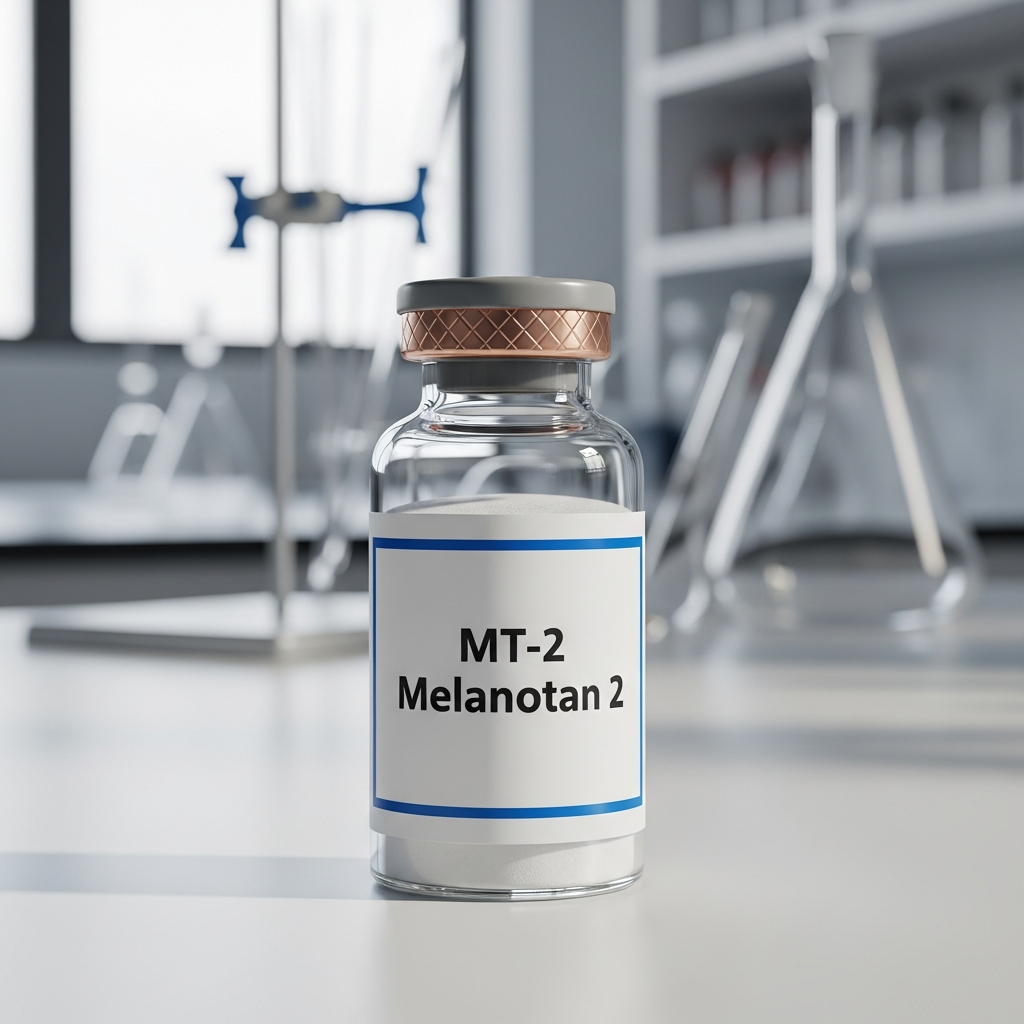
Disclaimer: This article is for educational and informational purposes only. It does not constitute medical advice. All products referenced are intended for research and laboratory use only and are not approved for human consumption.
Melanotan-2 (MT-2) is one of the most studied synthetic melanocortin peptides in pigmentation science, prized in laboratory settings for its ability to probe the melanocortin receptor system with a single, stable molecule. For researchers investigating melanogenesis, neuroendocrine signaling, and receptor pharmacology, MT-2 functions as a versatile chemical tool. This guide breaks down what MT-2 is, why it draws sustained research interest, how it differs from Melanotan-1 (afamelanotide), and what to verify before sourcing material. Everything below is framed strictly for research and laboratory use only.
Key Takeaways
- Melanotan-2 (MT-2) is a synthetic cyclic heptapeptide analogue of alpha-melanocyte-stimulating hormone (alpha-MSH), CAS 121062-08-6, molecular weight approximately 1024.2 g/mol, formula C50H69N15O9.
- It acts as a non-selective agonist at multiple melanocortin receptors (MC1R, MC3R, MC4R, MC5R), which is why research models show effects extending beyond pigmentation pathways.
- In published studies, MC1R activation by MT-2 stimulates melanogenesis and favors eumelanin, the darker, more photoprotective melanin fraction.
- Melanotan-1 (afamelanotide) is more MC1R-selective and is the clinically developed analogue; MT-2 is broader-acting and remains a research-grade compound.
- Quality verification matters: look for third-party HPLC testing, a batch-specific COA, and purity above 99 percent.
- Lyze Labs ships pharmaceutical-grade MT-2 worldwide with free discreet shipping, trusted by 12,000+ researchers across 150+ countries.
What Melanotan-2 Is and How It Works
Melanotan-2 is a synthetic cyclic heptapeptide first developed at the University of Arizona as a stable analogue of the natural hormone alpha-MSH. Its sequence is Ac-Nle-c[Asp-His-D-Phe-Arg-Trp-Lys]-NH2, and three structural modifications give it its laboratory utility: a norleucine substitution, a D-phenylalanine substitution, and a lactam bridge that cyclizes the molecule. Together these changes make MT-2 far more resistant to enzymatic breakdown than native alpha-MSH, which degrades almost immediately.
Mechanistically, MT-2 mimics alpha-MSH and binds the melanocortin receptor family. It is described in the literature as a non-selective agonist, meaning it activates MC1R, MC3R, MC4R, and MC5R rather than a single subtype. MC1R sits on melanocytes, and when MT-2 engages it, downstream signaling drives melanogenesis, the biological synthesis of melanin. This broad receptor profile is precisely why researchers find MT-2 useful as a probe and also why research models display systemic readouts that span pigmentation, neuroendocrine, and metabolic pathways.
The peptide's pharmacokinetics are relevant to study design. Reported research data place the subcutaneous half-life at roughly 30 minutes, with little measurable plasma activity after about 6 hours. Subcutaneous administration in models is associated with near-complete bioavailability, which is one reason it dominates the published methodology.
Why Researchers Are Interested in MT-2
The core appeal is melanogenesis. In published studies, MC1R activation by MT-2 enhances the synthesis of eumelanin, the brown-black pigment fraction that is more photoprotective than the lighter pheomelanin. This has made MT-2 a standard tool for investigating how the melanocortin axis governs pigmentation, including in models carrying MC1R variant alleles that otherwise skew toward pheomelanin production.
Beyond pigment, the multi-receptor profile opens other research questions. Work published in the International Journal of Molecular Sciences notes that MT-2 activates hypothalamic MC4R, a receptor central to the neuroendocrine regulation of hunger and satiety, making it a reference compound in appetite and energy-balance modeling. MC3R and MC5R engagement extends interest into broader neuroendocrine and exocrine signaling.
A January 2025 review in the Journal of the European Academy of Dermatology framed the current scientific posture clearly: while chronic MC1R activation through MT-2 may theoretically influence photoprotective pathways, safety has not been established for any non-laboratory application. That is the honest research context. MT-2 is a mechanistic tool with rich literature, not a validated agent, which is exactly why controlled laboratory study continues. For researchers building melanocortin programs, MT-2 pairs naturally with adjacent peptide investigations such as those covered in our GHK-Cu copper peptide research guide.
How MT-2 Compares to Melanotan-1 (Afamelanotide)
The most common comparison researchers raise is MT-2 versus Melanotan-1, also known as afamelanotide. The critical distinction is receptor selectivity. Melanotan-1 is comparatively MC1R-selective and was developed along a clinical pathway, where it accumulated phase II and phase III data in erythropoietic protoporphyria (EPP). One phase II trial of afamelanotide reported Fitzpatrick skin-type increases of one to two grades within ten days of a 16 mg implant, with pigmentation persisting for roughly 60 days. Melanotan-2, by contrast, is non-selective and remains a research-grade compound without that clinical development track.
| Property | Melanotan-2 (MT-2) | Melanotan-1 (Afamelanotide) |
|---|---|---|
| Receptor profile | Non-selective (MC1R, MC3R, MC4R, MC5R) | More MC1R-selective |
| Primary research focus | Broad melanocortin pharmacology, melanogenesis | Photoprotective pigmentation |
| Clinical development | Research-grade, no approved track | Phase III data in EPP |
| Typical research form | Lyophilized powder for reconstitution | Lyophilized powder / implant in clinical work |
| Systemic readouts in models | Broader (pigment plus neuroendocrine) | Narrower, pigment-focused |
In short, researchers reach for MT-2 when they want a broad melanocortin agonist to interrogate multiple receptor subtypes at once, and reach for MT-1 when the question is narrowly about MC1R-driven pigmentation. The two are complementary tools rather than interchangeable ones.
What to Look For in MT-2 Quality
Because MT-2 is a research peptide, the supplier's analytics matter more than marketing language. Three documents separate credible material from questionable stock.
First, a batch-specific Certificate of Analysis (COA). The COA should tie directly to the lot you receive, not a generic sample. Second, third-party HPLC (high-performance liquid chromatography) data confirming purity, ideally above 99 percent, since contaminants and truncated sequences confound melanogenesis readouts. Third, mass spectrometry confirmation that the measured molecular weight matches the expected approximately 1024.2 g/mol for the acetate salt form. Lyze Labs publishes batch COAs and HPLC results so researchers can verify identity and purity before designing experiments.
If you are new to reading these documents, our guide to verifying research peptide purity and COA data walks through each panel line by line. Equally important is knowing the warning signs of unreliable vendors, which we cover in the research peptide scam red flags breakdown. Skipping verification is the single most common reason melanocortin experiments fail to replicate.
Reconstitution and Storage Notes for Research Use
MT-2 ships as a lyophilized (freeze-dried) powder, the standard stable form for transport and long-term storage. In research workflows, the powder is reconstituted with bacteriostatic or sterile water before use. The unit math depends entirely on the vial size and the diluent volume chosen by the lab, so concentration is calculated per protocol rather than assumed.
Stability handling is straightforward but strict. Lyophilized MT-2 stored cold and protected from light retains integrity well. Once reconstituted, research sources recommend keeping the solution refrigerated at 2 to 8 degrees Celsius and using it within a defined window, typically two to four weeks, while avoiding repeated freeze-thaw cycles that degrade peptide chains. Labeling each vial with its reconstitution date is good practice for reproducibility. For a fuller methodology, see our how to reconstitute research peptides walkthrough and the peptide storage and stability guide, both of which apply directly to melanocortin peptides like MT-2.
Sourcing Melanotan-2 Globally
Global demand for melanocortin and GLP-1 class peptides has surged, and batch availability for high-purity MT-2 can tighten quickly. Securing material from a supplier with verifiable analytics protects both your data and your timeline. Lyze Labs supplies pharmaceutical-grade Melanotan-2 (MT-2) acetate with third-party HPLC testing, per-batch COAs, and purity above 99 percent.
Ordering is built around speed and discretion. WhatsApp is the preferred and fastest channel, and Lyze Labs also accepts Visa, Mastercard, UPI, PayPal, CashApp, bank and wire transfer, and crypto including BTC, USDT, and ETH. Every order ships with free worldwide delivery in discreet packaging, with typical transit of 7 to 14 days. That logistics network is part of why 12,000+ researchers across 150+ countries return for repeat batches. Securing your MT-2 acetate at current batch pricing locks in verified purity before the next lot rotates.
Frequently Asked Questions
What is Melanotan-2 used for in research?
In laboratory settings, Melanotan-2 is used as a non-selective melanocortin agonist to study melanogenesis, melanocortin receptor pharmacology, and neuroendocrine and metabolic signaling. Because it activates MC1R, MC3R, MC4R, and MC5R, researchers use it to probe several receptor pathways with one stable compound. It is strictly for research use only.
How is Melanotan-2 different from Melanotan-1?
Melanotan-2 is non-selective and activates multiple melanocortin receptors, while Melanotan-1 (afamelanotide) is more MC1R-selective and followed a clinical development path with phase III data in erythropoietic protoporphyria. In research models this means MT-2 produces broader systemic readouts, whereas MT-1 is more narrowly focused on MC1R-driven pigmentation.
What is the molecular weight and CAS number of MT-2?
Melanotan-2 has a molecular weight of approximately 1024.2 g/mol and the chemical formula C50H69N15O9, with CAS number 121062-08-6. Its peptide sequence is Ac-Nle-c[Asp-His-D-Phe-Arg-Trp-Lys]-NH2. Mass spectrometry on a quality COA should confirm this molecular weight for the acetate salt.
How should research-grade Melanotan-2 be stored?
Lyophilized MT-2 powder should be kept cold and protected from light for long-term stability. Once reconstituted with bacteriostatic or sterile water, research sources recommend refrigeration at 2 to 8 degrees Celsius, use within roughly two to four weeks, and avoiding repeated freeze-thaw cycles that degrade the peptide.
How can I verify the purity of Melanotan-2 before buying?
Request a batch-specific Certificate of Analysis backed by third-party HPLC data showing purity above 99 percent, plus mass spectrometry confirming the expected molecular weight. Lyze Labs provides per-batch COAs and HPLC results so identity and purity can be checked before any experiment. Our COA verification guide explains how to read each panel.
How do I order Melanotan-2 from Lyze Labs?
The fastest route is WhatsApp, and Lyze Labs also accepts card, UPI, PayPal, CashApp, bank or wire transfer, and crypto (BTC, USDT, ETH). Orders ship free worldwide in discreet packaging with typical delivery in 7 to 14 days. Visit the MT-2 product page to start an order and confirm current batch availability.
Ready to secure verified, HPLC-tested material? Order Melanotan-2 (MT-2) acetate directly through the product page or message the team on WhatsApp for the fastest response and current batch pricing. All material is supplied for research and laboratory use only.
Related Research Guides
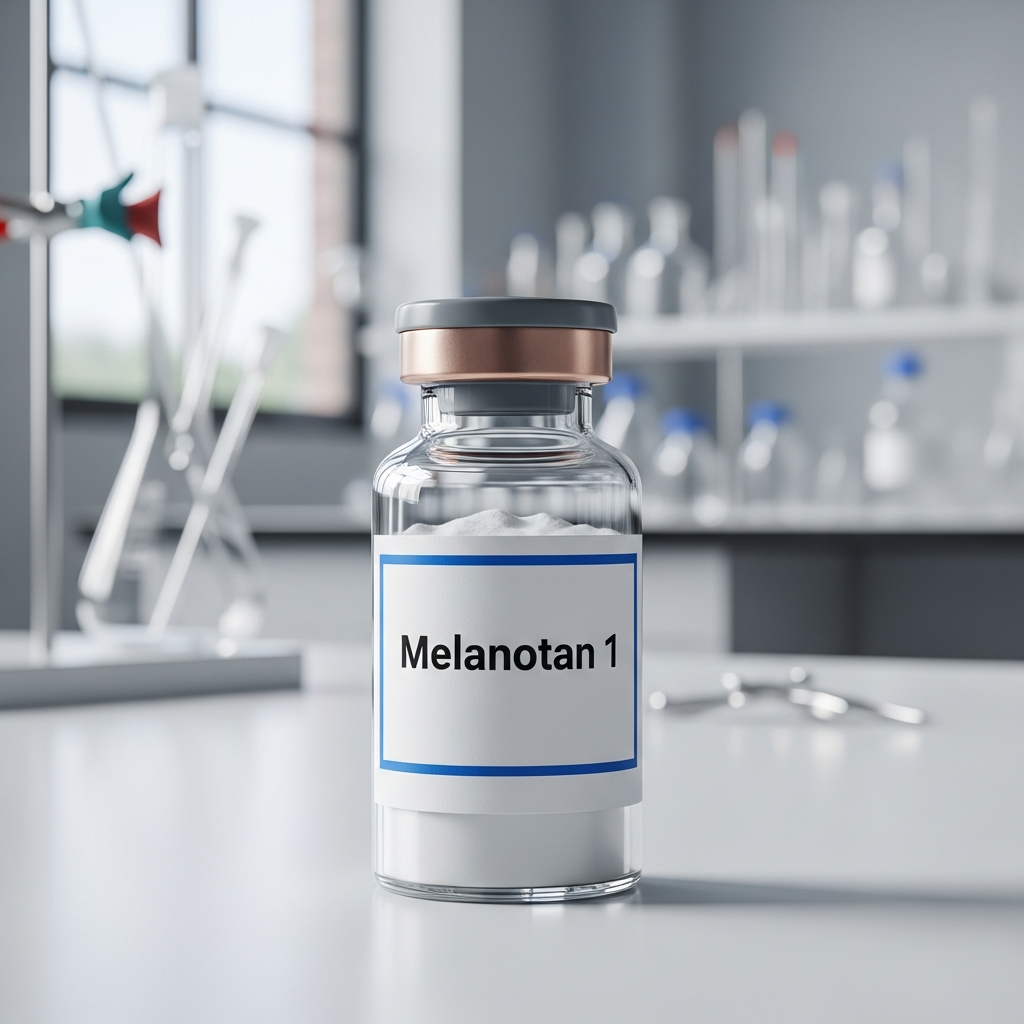
Melanotan 1 vs Melanotan 2: Receptor Selectivity, Pigmentation, and Research Differences
A research-focused comparison of Melanotan 1 (afamelanotide) and Melanotan 2: how MC1R selectivity versus pan-melanocortin binding shapes pigmentation studies, structure, and receptor pharmacology.
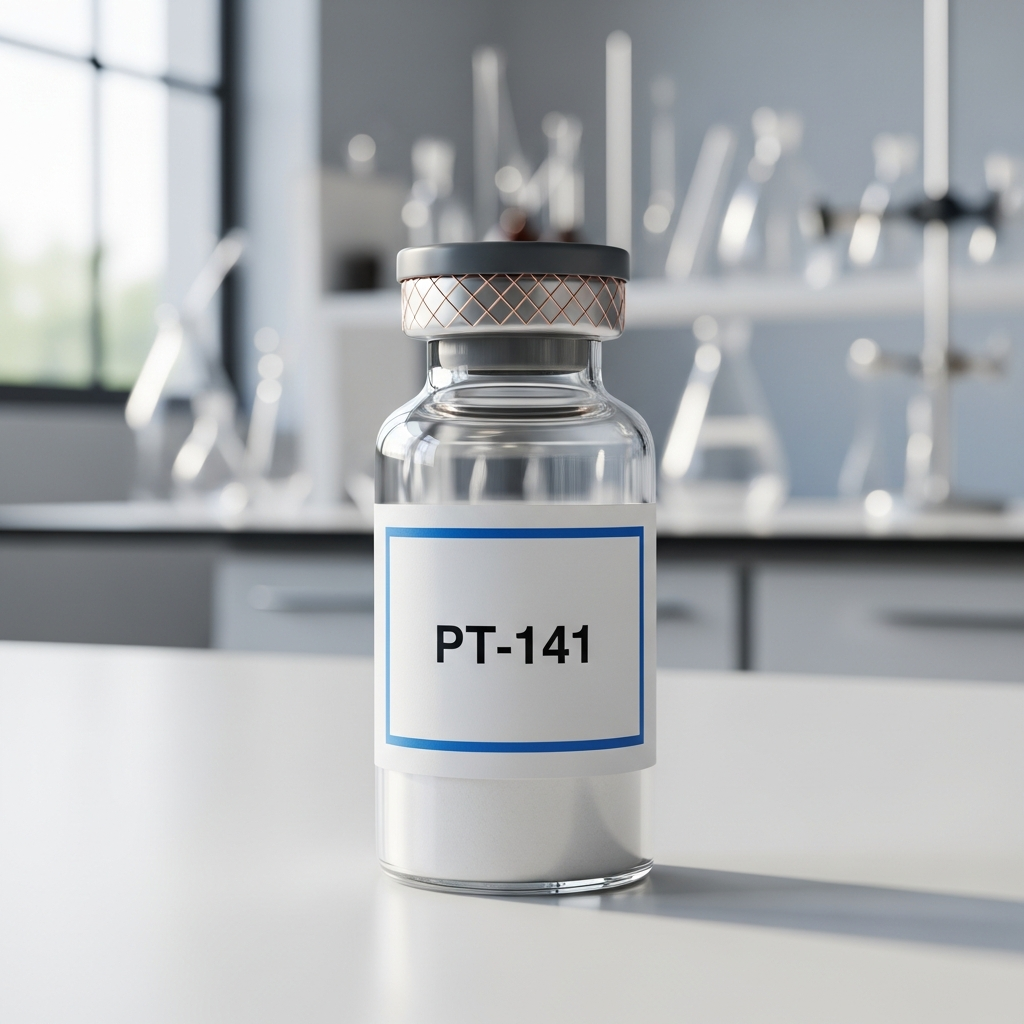
PT-141 (Bremelanotide): Melanocortin Pathway Research Guide
A research-focused overview of PT-141 (Bremelanotide), the synthetic melanocortin receptor agonist studied for its central action on arousal pathways. Covers MC3R/MC4R mechanism, how it differs from peripheral PDE5 compounds, and what defines laboratory-grade material.

How to Choose a Research Peptide Supplier: The 2026 Verification Checklist
A practical 2026 framework for choosing a research peptide supplier: lot-matched HPLC COAs, mass-spec identity, batch transparency, and the verification steps that separate a legit peptide source from a forged one.