Peptide Storage and Stability: How Long Does a Reconstituted Peptide Actually Last?
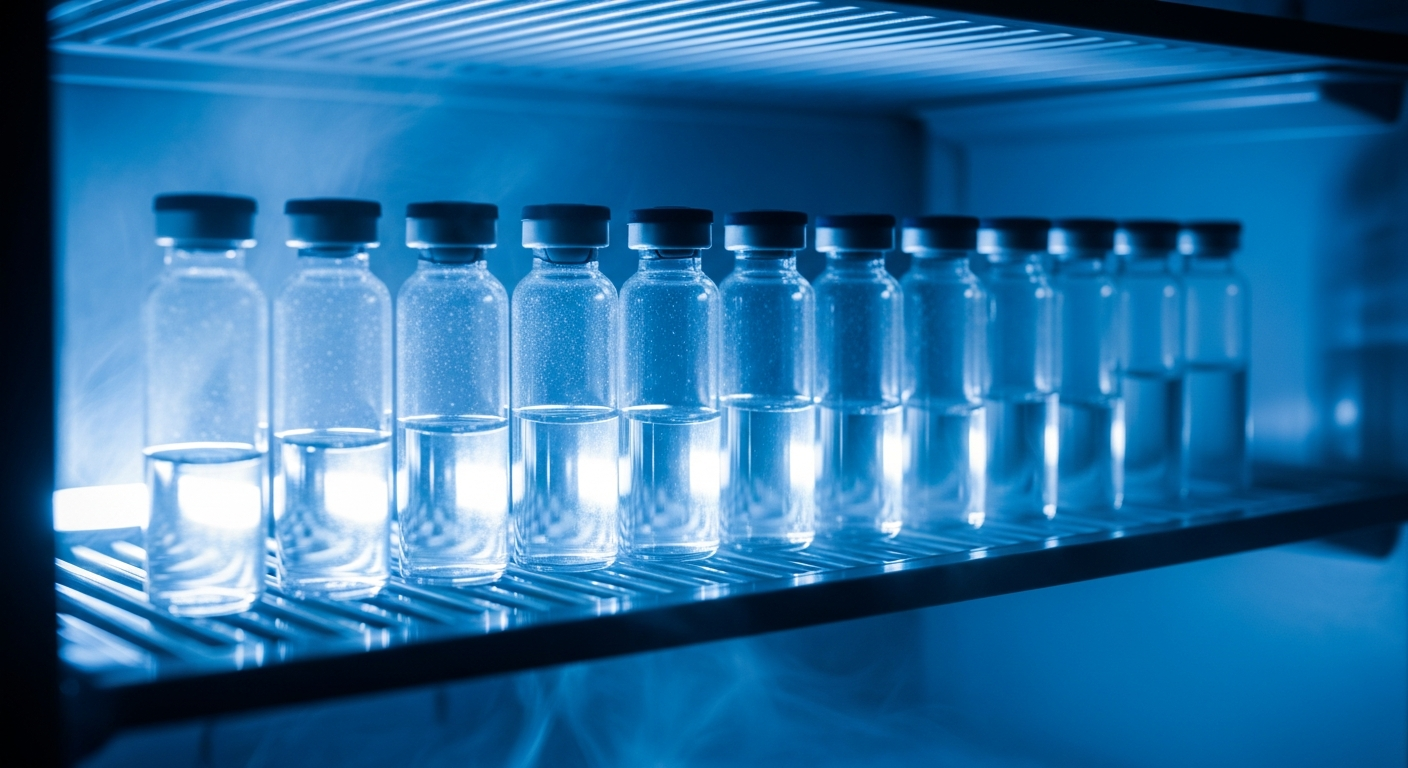
Cold, dark, still. Those three words cover 90 percent of what you need to know about storing a research peptide. The other 10 percent is what separates careful research from wasted reagent.
Disclaimer: This article is for educational and informational purposes only. It does not constitute medical advice. All products referenced are intended for research and laboratory use only and are not approved for human consumption.
Every research peptide has a shelf life before reconstitution and a different, shorter shelf life after. Most researchers know the first number roughly and the second number not at all. This is the guide that gives you both, with the reasoning behind each number and the practical storage rules that protect research material between the time it lands on your shelf and the time you actually use it.
The short version
- Lyophilized (dry) peptide: stable for months at refrigerator temperatures, stable for years at freezer temperatures, if stored properly.
- Reconstituted peptide in bacteriostatic water, refrigerated: stable for practical research windows measured in weeks for most common compounds.
- Reconstituted peptide frozen: most compounds tolerate freezing poorly because ice crystal formation damages peptide structure. Avoid freezing reconstituted solutions unless the compound-specific guidance explicitly supports it.
- Room temperature reconstituted peptide: degrades quickly. Minimize time out of refrigeration.
If you only read one section of this guide, read that one.
The three enemies of peptide stability
Peptide degradation in solution is driven by three mechanisms. Understanding them is how you understand the storage rules.
1. Temperature (enzymatic and hydrolytic degradation)
Warmer temperatures accelerate every chemical process that degrades peptides, including hydrolysis of peptide bonds, oxidation of methionine and cysteine residues, deamidation of asparagine and glutamine residues, and aggregation of unfolded protein segments. Refrigeration at 2 to 8 degrees Celsius slows these reactions dramatically. Freezing at minus 20 degrees Celsius or minus 80 degrees Celsius slows them further for dry material but introduces a different problem (ice crystal damage) in solution.
2. Light (photodegradation)
Ultraviolet and high-intensity visible light can damage specific amino acid residues, particularly tryptophan, tyrosine, and phenylalanine. Storage in opaque or amber containers, or in the dark inside a refrigerator, eliminates this risk. Most peptide vials are clear glass, which is why the refrigerator itself is the protective environment.
3. Mechanical stress (aggregation)
Shaking, high-shear mixing, air-water interface exposure, and freeze-thaw cycles all introduce mechanical stress that can cause peptide unfolding, aggregation, and loss of activity. This is why reconstitution technique and storage discipline both matter. A well-reconstituted vial that is handled carelessly afterward can still lose integrity.
Pre-reconstitution storage
Short-term storage (days to a few weeks)
Refrigerator at 2 to 8 degrees Celsius is fine for dry peptides that will be used soon. No need to freeze short-term stock.
Medium-term storage (weeks to months)
Refrigerator is adequate for most dry peptides for several months. If the compound is known to be particularly stable (BPC-157 is a good example), refrigerator storage can extend longer.
Long-term storage (months to years)
Freezer at minus 20 degrees Celsius for long-term storage of dry material. For ultra-long-term storage or research samples that need to be preserved for years, minus 80 degrees Celsius (ultra-low freezer) is the standard. Dry peptides tolerate freezing well because there is no water to form damaging ice crystals.
Do not
- Leave dry vials at room temperature for extended periods
- Store near light sources or in direct sunlight
- Store in humid environments where the lyophilized powder could absorb moisture through any imperfect stopper seal
Post-reconstitution storage
This is where most of the practical questions live.
The rule: refrigerate, use, return
Once a peptide is reconstituted in bacteriostatic water, the vial lives in the refrigerator between uses. Pull it out, draw your dose, return it. Do not leave it on the counter during a protocol session. Do not transport it at room temperature for long periods. Time at room temperature should be measured in minutes, not hours.
How long does reconstituted peptide last
For most common research peptides reconstituted in bacteriostatic water and stored at 2 to 8 degrees Celsius, expected practical stability is measured in weeks. The exact window depends on the specific compound, the concentration, and storage discipline.
Here is a practical reference framework:
| Compound class | Practical refrigerated window |
|---|---|
| GLP-1 family (Semaglutide, Tirzepatide, Retatrutide) | Several weeks |
| Healing peptides (BPC-157, TB-500) | Several weeks |
| Growth hormone secretagogues (CJC-1295, Ipamorelin) | Several weeks |
| Small stable peptides (Epitalon, GHK-Cu) | Several weeks |
| Shorter or less stable peptides (DSIP, Selank) | Shorter practical window |
These are practical research windows, not absolute stability limits. Proper storage combined with careful handling extends them. Poor storage discipline shortens them.
Why freezing reconstituted peptide is usually a bad idea
When water freezes, ice crystals form. Ice crystals physically damage peptide molecules by concentrating them in the remaining liquid phase (freeze concentration) and by mechanically disrupting folded structure. A single freeze-thaw cycle can cause measurable peptide damage. Multiple freeze-thaw cycles compound the effect.
The exceptions exist. Some compounds tolerate freezing with appropriate cryoprotection or specific handling. But for most research peptides in a standard bacteriostatic water reconstitution, the default rule is "do not freeze reconstituted solution."
If you need a compound stable for a longer timeframe than refrigerated solution allows, the better strategy is to reconstitute smaller amounts from the dry vial as needed, rather than reconstituting everything at once and freezing the surplus.
Concentration matters
Higher concentration peptide solutions are often slightly more stable per unit of peptide than very dilute ones, because the surface-to-volume ratio is different and interactions with the container walls are proportionally smaller. This is a marginal effect but it is a reason some research protocols use relatively high concentration solutions and then dilute at the point of use.
Freeze-thaw cycles
If a frozen solution is the right choice for a specific compound, the single most important discipline is minimizing freeze-thaw cycles. Aliquot the solution into small volumes matched to single-use quantities, freeze the aliquots separately, and thaw only what you need each time. Never re-freeze a thawed aliquot.
This is the same principle used in serious biological research with proteins and enzymes. For most research peptides, avoiding frozen solution entirely is simpler.
Signs of peptide degradation
You cannot see most degradation with the naked eye. These are the signs that are visible when something has gone wrong:
- Cloudiness or turbidity in a solution that was previously clear
- Visible particulate material in the solution
- Color change that is not characteristic of the compound (GHK-Cu's faint blue is normal, an unexpected yellow or brown tint is not)
- Persistent foam that does not settle after a minute
- Unusual smell (most peptides in solution are essentially odorless)
If any of these appear, the vial should not be used for research. Degradation is rarely recoverable.
Most degradation is invisible. This is why storage discipline matters more than spot-checking solutions.
Compound-specific notes
GLP-1 family (Semaglutide, Tirzepatide, Retatrutide)
Refrigerated reconstituted solution is the standard. These peptides are among the more stable in solution. Typical research protocols use refrigerated storage for the duration of the dosing schedule. Retatrutide product page, Tirzepatide product page, Semaglutide product page.
BPC-157
Known for exceptional solution stability compared to other peptides. Refrigerated reconstituted solution tolerates standard research windows very well. BPC-157 product page.
TB-500
Solution-stable. Refrigerated standard storage applies. Compatible with blend formats like BPC + TB blend which uses the same storage rules as single-compound vials.
CJC-1295 (DAC and no-DAC)
Both forms are stable under refrigerated storage after reconstitution. Label the vial with the form and the reconstitution date because the two forms have different dosing windows in research protocols. CJC-1295 no-DAC, CJC-1295 DAC.
Ipamorelin
Stable under standard refrigerated storage. The pentapeptide structure is compact and the solution tolerates normal handling well. Ipamorelin product page.
Epitalon
Small tetrapeptide, stable in solution. Refrigerated storage for the standard window. Epitalon product page.
GHK-Cu
The copper complex gives GHK-Cu solutions a faint blue color that is characteristic and not a sign of degradation. Solutions should remain a consistent blue throughout the storage window. Any change to green, yellow, or brown indicates a problem. GHK-Cu product page.
DSIP, Selank, Semax
Shorter-chain neuropeptides. Refrigerated storage after reconstitution is standard, and the practical stability window may be shorter than for the metabolic or healing peptides. Use within a tighter timeframe if your protocol allows.
Frequently asked questions
What is the exact shelf life of a reconstituted peptide
There is no single exact number because it depends on the compound, the concentration, the storage conditions, and the handling discipline. For most research peptides in bacteriostatic water under refrigeration, practical stability is measured in weeks. Specific compounds may support longer or shorter windows. Err toward conservative windows for research that needs reproducibility.
Can I ship a reconstituted peptide
Generally no. Reconstituted solutions should not be shipped because temperature excursions during transit accelerate degradation and because shipping can subject vials to mechanical stress that damages the peptide. Ship dry vials and reconstitute at the destination.
Does the refrigerator temperature matter
Yes, within reason. Standard refrigerator temperatures in the 2 to 8 degrees Celsius range are appropriate. Minimize temperature fluctuations by storing peptide vials in the back of the refrigerator, not in the door where the temperature varies as the door opens. Avoid compartments near defrost cycles that can briefly warm the area.
What if my peptide arrived at room temperature
Dry lyophilized peptide is generally robust to brief room temperature exposure during shipping. Short transit at ambient temperature does not materially compromise most common research peptides. Refrigerate upon arrival and the material will be fine. If shipping was abnormally long or conditions were extreme, contact the vendor to discuss.
Can I store different peptides together
Yes, dry or reconstituted peptide vials can share refrigerator or freezer space as long as they are clearly labeled and the compartment is clean and temperature-stable. Keep them away from food and away from volatile chemicals.
How do I extend the stability of a reconstituted vial
Three levers. First, keep the vial cold continuously (minimize counter time). Second, protect from light by keeping it inside the refrigerator. Third, avoid repeated needle punctures to the stopper by drawing efficiently and minimizing exposure of the solution to air. The preservative in bacteriostatic water protects against bacterial growth, but it does not protect against chemical or mechanical degradation.
The takeaway
Peptide storage is simple in principle and demanding in discipline. Dry material lives in the freezer for long-term or the refrigerator for near-term use. Reconstituted material lives in the refrigerator from the moment you mix it until the moment you use the last dose. Room temperature exposure is measured in minutes, not hours. Freezing reconstituted solution is usually a mistake.
Get those rules right and your research material is the same quality at the end of the protocol as it was on day one. Get them wrong and you are running your study on degraded reagent without knowing it.
If you have not reconstituted yet, read the reconstitution how-to for the matching procedure. Both guides together give you the full handling protocol for any research peptide in the catalog.
This article is for research and educational purposes. All products sold by LyzeLabs are strictly for laboratory research and not intended for human consumption or therapeutic use.
Related Research Guides
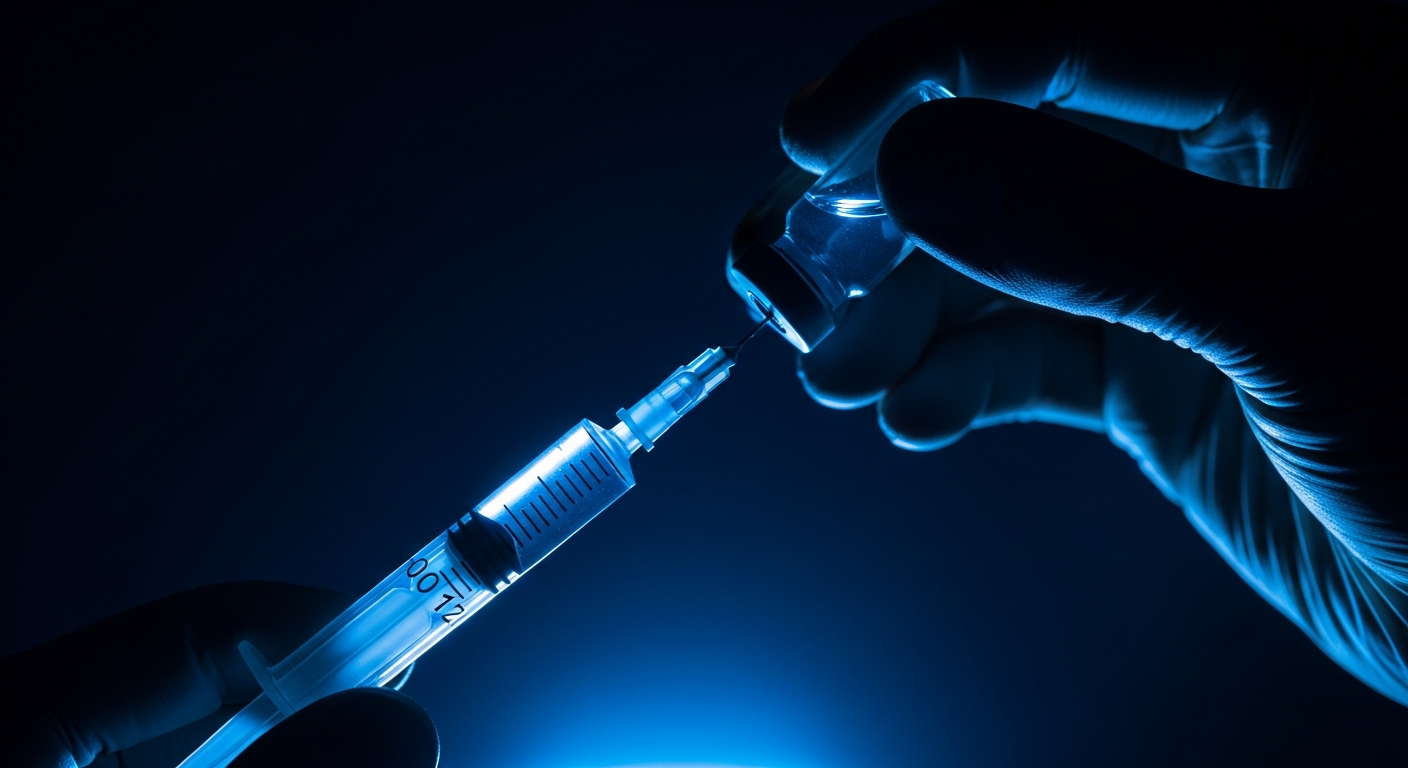
How to Reconstitute a Research Peptide Without Ruining It
Reconstitution is the stage where most research peptides get damaged, and almost all the damage is avoidable. Here is the exact procedure, the math, the mistakes to skip, and the reasoning behind each step.
Trevogrumab vs Garetosmab vs Bimagrumab vs Apitegromab: The 2026 Myostatin Inhibitor Comparison
Four monoclonal antibodies, one pathway, four different points of attack. What trevogrumab, garetosmab, bimagrumab and apitegromab each bind, what the 2026 trial data shows, and how to choose between a ligand trap and a receptor blocker.

How to Choose a Research Peptide Supplier: The 2026 Verification Checklist
A practical 2026 framework for choosing a research peptide supplier: lot-matched HPLC COAs, mass-spec identity, batch transparency, and the verification steps that separate a legit peptide source from a forged one.