Comparisons
KPV vs BPC-157: Calming Inflammation or Driving Repair?
KPV and BPC-157 both show up in gut and healing research, but they do different jobs. KPV turns down inflammation; BPC-157 drives repair. Here is how they compare.
LyzeLabs Research Team · Updated · 5 min read
In this guide
KPV and BPC-157 often turn up in the same gut and healing studies, and in the same blend. They do different jobs. KPV turns down the inflammation signal inside cells. BPC-157 speeds up repair: cells that move into a wound, new blood vessels, tissue that closes. One is a brake on inflammation; the other is a push toward healing.
The Short Answer
- KPV is three amino acids (lysine, proline, valine), the last three of the hormone alpha-MSH. In human gut and immune cells, tiny amounts blocked two main inflammation switches, NF-κB and MAP kinase (Dalmasso, 2008). In mice with colitis, it reduced the inflammation.
- BPC-157 is 15 amino acids, part of a larger protein found in human gastric juice (Chang, 2011). In rats, it helped injuries heal along the whole gut and in tendons, ligaments and bone (Seiwerth, 2018).
- So KPV is the tool for studying inflammation itself. BPC-157 is the tool for studying tissue repair.
How Each One Works
KPV: a brake on inflammation
KPV comes from alpha-MSH (alpha-melanocyte-stimulating hormone), a hormone with known anti-inflammatory effects. Positions 11 to 13 of alpha-MSH are K, P and V, and that small end piece keeps much of the action.
KPV is small enough to be carried into cells by PepT1, a transporter for peptides of two or three amino acids. PepT1 normally sits in the small intestine, and it shows up in the colon during inflammatory bowel disease. Inside the cell, KPV blocked the NF-κB and MAP kinase pathways and cut the release of inflammatory cytokines. In mice, KPV added to drinking water reduced two kinds of chemically caused colitis (Dalmasso, 2008).
A second mouse study found faster recovery and less inflammation in two colitis models. KPV also worked in mice without a working MC1R, one of the receptors alpha-MSH acts on, so its effect does not depend only on that receptor (Kannengiesser, 2008).
BPC-157: a push toward repair
BPC-157 stands for Body Protection Compound 157. Its sequence is GEPPPGKPADDAGLV, and the group that discovered it describes it as unusually stable (Sikiric, 2006).
In rat tendon cells, BPC-157 did not make cells divide faster. Instead, it helped them survive stress, spread out and move, which is how a tendon closes a gap. It did this by switching on the FAK-paxillin pathway (Chang, 2011). A review of the rat studies found it helped heal injuries from the esophagus to the lower bowel, and improved tendon, ligament and bone healing, in part by growing new blood vessels (Seiwerth, 2018).
For more, see the BPC-157 vs TB-500 guide.
Side-by-Side Comparison
| Feature | KPV | BPC-157 |
|---|---|---|
| Length | 3 amino acids | 15 amino acids |
| Size | ~342 Da | ~1,419 Da |
| Comes from | The end of alpha-MSH | A protein in human gastric juice |
| Main job | Calms inflammation | Drives repair |
| Key pathways | Blocks NF-κB and MAP kinase | Switches on FAK-paxillin, grows blood vessels |
| Main study models | Human cells, mouse colitis | Rat gut, tendon, ligament and bone injury |
| Human trials | None reported in these studies | Early trials in inflammatory bowel disease, described as safe by its developers |
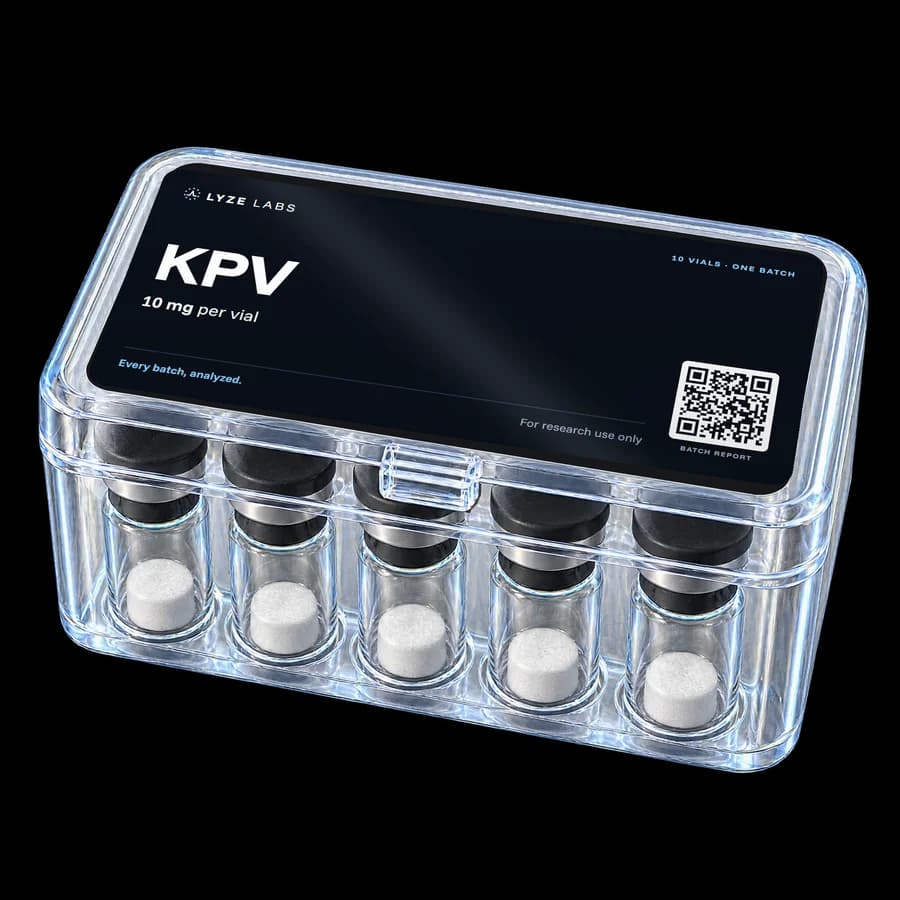
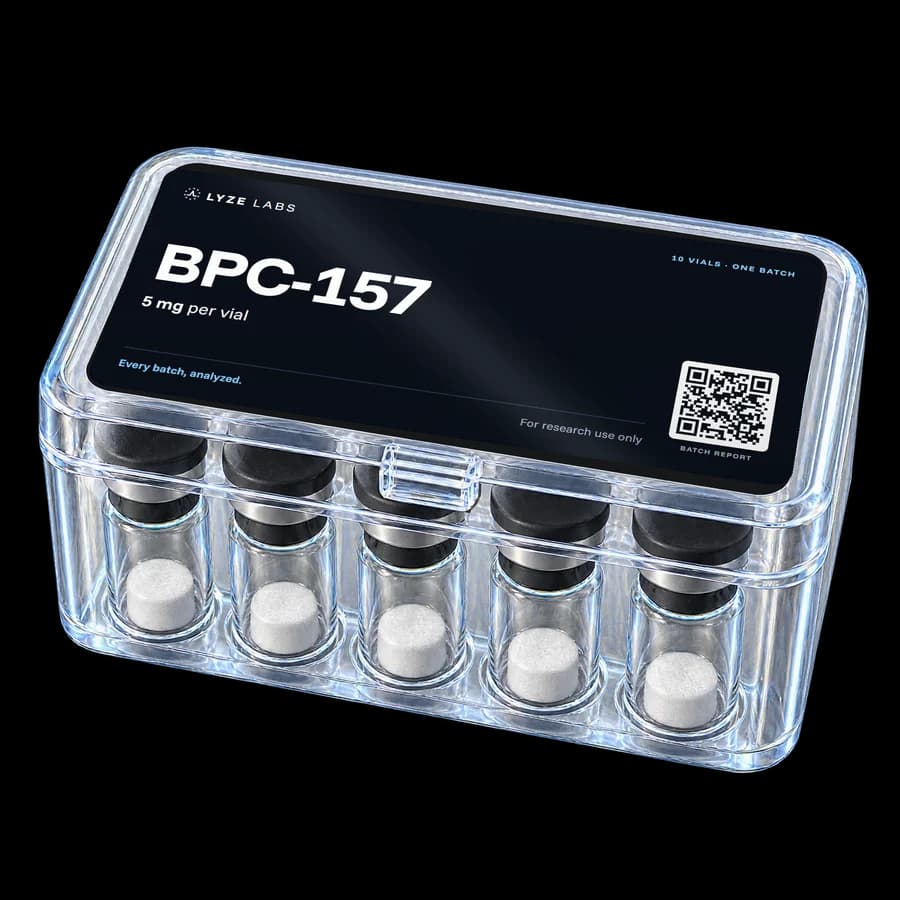
| Our kits | 10 mg x 10 vials | 5 or 10 mg x 10 vials |
Which One Fits Which Research Question?
Choose KPV when your question is about inflammation itself: cytokines, NF-κB, the gut lining's immune response, or how a peptide given by mouth reaches gut cells.
Choose BPC-157 when your question is about repair: closing a wound, tendon or ligament healing, bone, or new blood vessel growth.
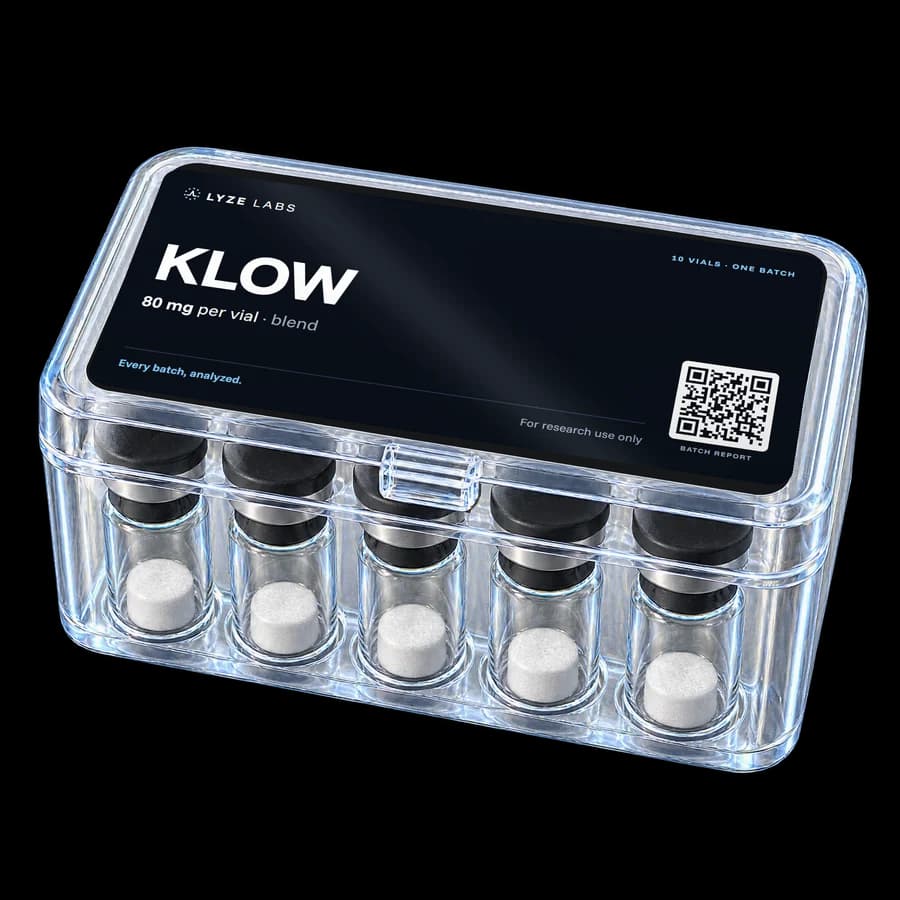
Study both when you want to separate the two halves of healing. In a colitis model, KPV shows what calming inflammation does, and BPC-157 shows what speeding repair does. The KLOW blend holds both, with TB-500 and GHK-Cu, 80 mg per vial. See the KLOW vs GLOW guide.
Each also comes on its own as a ten-vial kit: KPV in 10 mg and BPC-157 in 5 or 10 mg.
Handling Differences
Both arrive as freeze-dried powder and mix with bacteriostatic water. KPV is tiny, so 10 mg of KPV holds about four times as many molecules as 10 mg of BPC-157. Keep that in mind when you compare the two at the same weight. Keep mixed vials in the fridge. See how to reconstitute research peptides.
Frequently Asked Questions
Is KPV better than BPC-157?
They do different things. KPV is studied for calming inflammation, mostly in the gut. BPC-157 is studied for repair across the gut, tendons, ligaments and bone. The better choice depends on your question.
What is KPV made from?
KPV is the last three amino acids of alpha-MSH: lysine, proline and valine. That small piece keeps much of the hormone's anti-inflammatory action.
Do KPV and BPC-157 both work on the gut?
Both are studied there. KPV reduced inflammation in mouse colitis. BPC-157 helped heal many kinds of injury along the rat gut, from the esophagus to the lower bowel.
Can KPV work when given by mouth in studies?
In one mouse study, KPV in drinking water reduced colitis. The PepT1 transporter in the gut lining carries it into cells.
Are KPV and BPC-157 ever combined?
Yes. The KLOW blend combines KPV, BPC-157, TB-500 and GHK-Cu, so one vial covers both inflammation and repair.
Studies Cited
- Dalmasso G, et al. (2008). PepT1-mediated tripeptide KPV uptake reduces intestinal inflammation. Gastroenterology.
- Kannengiesser K, et al. (2008). Melanocortin-derived tripeptide KPV has anti-inflammatory potential in murine models of inflammatory bowel disease. Inflammatory Bowel Diseases.
- Sikiric P, et al. (2006). Stable gastric pentadecapeptide BPC 157 in trials for inflammatory bowel disease (PL-10, PLD-116, PL 14736, Pliva, Croatia). Full and distended stomach, and vascular response. Inflammopharmacology.
- Chang CH, et al. (2011). The promoting effect of pentadecapeptide BPC 157 on tendon healing involves tendon outgrowth, cell survival, and cell migration. Journal of Applied Physiology.
- Seiwerth S, et al. (2018). BPC 157 and standard angiogenic growth factors. Gastrointestinal tract healing, lessons from tendon, ligament, muscle and bone healing. Current Pharmaceutical Design.
This guide is for education. It is not medical advice. Every compound we supply is for laboratory research only and is not for human use.