KLOW vs GLOW Peptide: The Complete Comparison Guide
KLOW is GLOW plus KPV. This guide compares both research blends side by side: what each is studied for, the KPV difference, vial ratios, and reconstitution math for laboratory use.
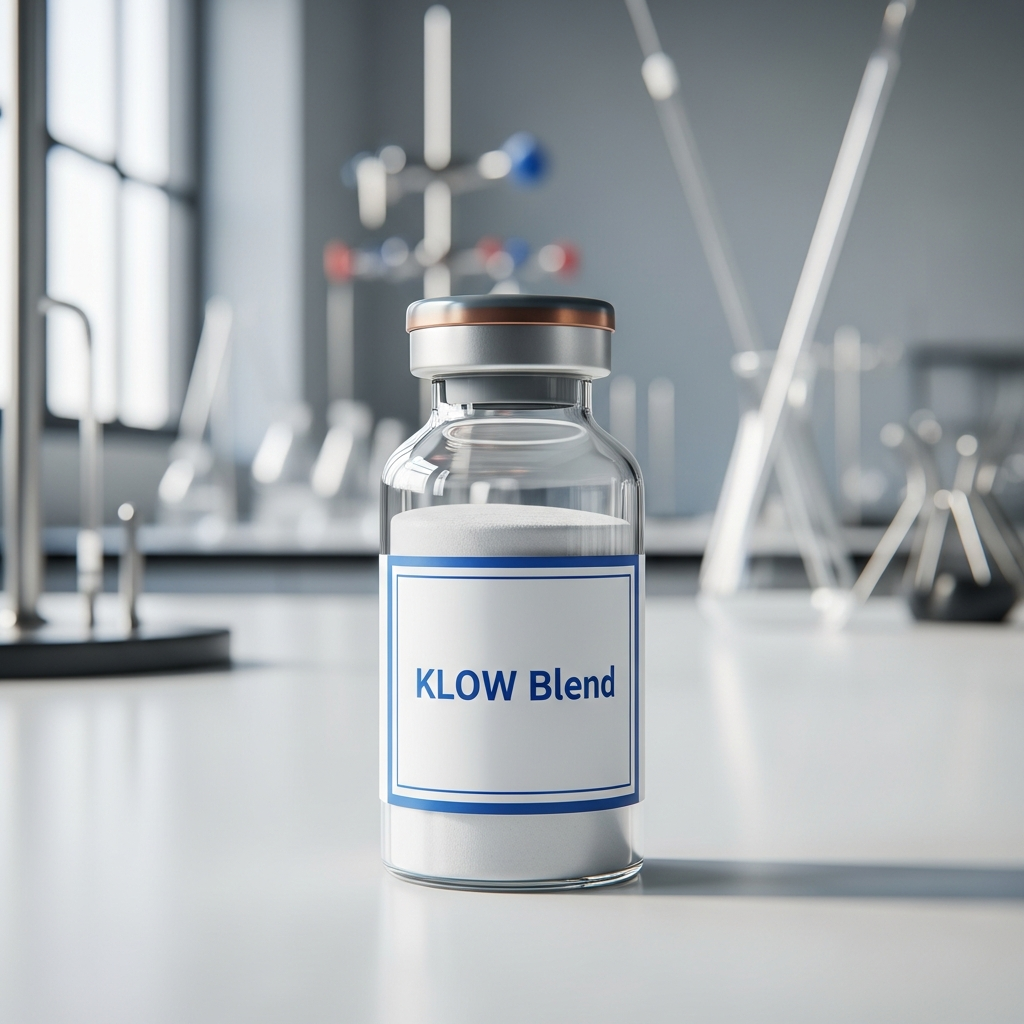
Disclaimer: This article is for educational and informational purposes only. It does not constitute medical advice. All products referenced are intended for research and laboratory use only and are not approved for human consumption.
If you have compared regenerative peptide blends, you have run into the same two names again and again: KLOW and GLOW. They look almost identical on a label, they share three of the same peptides, and they are often priced within a few dollars of each other. The single difference is one tripeptide, KPV, and that one addition changes what each blend is studied for. This guide breaks down KLOW vs GLOW the way a research buyer actually needs it: composition, mechanism, vial ratios, and reconstitution math, all framed strictly for laboratory use.
Lyze Labs supplies both blends as third-party HPLC tested material at 99%+ purity, with a published certificate of analysis for every batch. Below you will find the science, a side-by-side table, and the practical notes researchers ask for most.
Key Takeaways
- KLOW = GLOW + KPV. GLOW is a three-peptide blend (GHK-Cu, TB-500, BPC-157). KLOW adds a fourth peptide, KPV, an anti-inflammatory fragment of alpha-MSH.
- GLOW is studied for regeneration and skin/tissue repair. The three-peptide triad is investigated in wound healing, collagen, and angiogenesis research models.
- KLOW layers in immune modulation. KPV is studied for its direct inhibition of NF-kB inflammatory signaling, extending interest into gut-skin axis and inflammatory models.
- Standard KLOW vials run 80 mg total (commonly 50 mg GHK-Cu plus 10 mg each of TB-500, BPC-157, and KPV). GLOW vials are typically 70 mg with no KPV.
- Both reconstitute the same way with bacteriostatic water, and the GHK-Cu copper tint is a normal visual marker, not a defect.
- Lyze Labs ships both blends free and discreetly worldwide in 7 to 14 days, with COA-backed batch verification trusted by 12,000+ researchers across 150+ countries.
What Is GLOW Peptide?
GLOW is a combination research blend built around three of the most documented regenerative peptides in the literature. The acronym is informal, used across the research community to describe the GHK-Cu, TB-500, and BPC-157 triad. Each component contributes a distinct mechanism that researchers study in combination:
- GHK-Cu (Glycine-Histidine-Lysine copper): a naturally occurring tripeptide that binds copper ions and is investigated for its broad influence on gene expression. Published work has associated GHK-Cu with the modulation of thousands of genes related to tissue remodeling, with plasma concentration known to decline with age.
- TB-500 (a synthetic fragment of Thymosin Beta-4): studied for its interaction with actin, the structural protein that drives cell migration. In research models, TB-500 is associated with cell migration to injury sites and angiogenesis.
- BPC-157 (Body Protection Compound): a pentadecapeptide derived from a gastric protein, investigated in animal models for tendon, ligament, and gastrointestinal mucosal protection.
The research thesis behind GLOW is complementarity: GHK-Cu signals remodeling, TB-500 mobilizes cells, and BPC-157 supports structural and vascular repair. For a deeper single-compound view, see our GHK-Cu copper peptide research guide and the BPC-157 vs TB-500 healing blend guide.
What Is KLOW Peptide?
KLOW is the same GLOW backbone with one strategic addition: KPV, the K in the name. KPV (Lys-Pro-Val) is a tripeptide corresponding to positions 11 to 13 of alpha-melanocyte-stimulating hormone (alpha-MSH). Despite being only three amino acids, research indicates KPV retains the anti-inflammatory profile of its parent hormone while lacking the pigmentation activity of full alpha-MSH.
Mechanistically, KPV is studied for a receptor-independent route into cells, partly via the PepT1 transporter, where it is reported to directly inhibit NF-kB activation, a master regulator of inflammatory gene expression. Preclinical research has examined KPV in models of inflammatory bowel disease, contact dermatitis, and bronchial inflammation. The research logic of KLOW is therefore a layered one: where the GLOW triad is investigated for rebuilding tissue, KPV is investigated for modulating the inflammatory environment in which that repair occurs.
That distinction is the entire KLOW vs GLOW decision for most researchers. Studies oriented around cosmetic, collagen, or structural-repair endpoints often center on GLOW. Studies that introduce an inflammatory or gut-skin axis variable often reach for KLOW.
KLOW vs GLOW: Side-by-Side Comparison
| Attribute | GLOW | KLOW |
|---|---|---|
| Peptides | GHK-Cu, TB-500, BPC-157 | GHK-Cu, TB-500, BPC-157, KPV |
| Fourth peptide (KPV) | No | Yes |
| Typical total vial mass | ~70 mg | ~80 mg |
| Common ratio | 50 / 10 / 10 mg | 50 / 10 / 10 / 10 mg |
| Primary research focus | Tissue repair, collagen, angiogenesis | Repair plus inflammatory and immune modulation |
| Added mechanism | Remodeling and migration | NF-kB inhibition via KPV |
| Color in solution | Blue tint (GHK-Cu copper) | Blue tint (GHK-Cu copper) |
| Reconstitution | Bacteriostatic water | Bacteriostatic water |
| Purity (Lyze Labs) | 99%+ HPLC, COA | 99%+ HPLC, COA |
The table makes the relationship obvious. KLOW is not a different category of product. It is GLOW with an inflammation-focused tripeptide bolted on, at a small mass and price premium.
KLOW vs GLOW Benefits Studied in Research Models
Because KLOW and GLOW share three peptides, the bulk of their investigated properties overlap. Researchers comparing KLOW vs GLOW benefits in published and preclinical literature typically map them like this:
Shared (both blends), in research models:
- Wound closure and tissue regeneration signaling
- Collagen and extracellular matrix remodeling (driven by GHK-Cu)
- Angiogenesis and cell migration (driven by TB-500 and BPC-157)
- Gastrointestinal mucosal protection (BPC-157)
KLOW-only additions, in research models:
- Direct NF-kB pathway inhibition and reduced pro-inflammatory cytokine output
- Interest in gut-skin axis and inflammatory bowel models (KPV via PepT1)
- Antimicrobial and immune-modulating activity attributed to KPV fragments
None of this constitutes a human protocol. These are observations from cell and animal studies, supplied here only to clarify how the two blends differ on paper. Human clinical evidence for KPV specifically remains limited, which is why all framing stays at the research-model level.
KLOW Dosage and Reconstitution Notes (Research Framing)
When researchers ask about "KLOW dosage," what they actually need is the reconstitution math so the blend reaches a known concentration in solution. A standard 80 mg KLOW vial is reconstituted with bacteriostatic water, and the volume chosen sets the concentration of every peptide in the blend simultaneously because the ratios are fixed.
For example, an 80 mg vial reconstituted with 2.0 mL of bacteriostatic water yields a solution where each 0.1 mL contains roughly 2.5 mg GHK-Cu and 0.5 mg each of TB-500, BPC-157, and KPV. Using 2.5 mL instead simply dilutes those figures proportionally. Researchers select the volume that makes their target draw fall on a convenient mark on a U-100 measuring syringe.
GLOW is handled identically, minus the KPV line. The faint blue color you see after reconstitution comes from the copper in GHK-Cu and is an expected visual signature, not contamination. For step-by-step technique, see how to reconstitute research peptides and the peptide storage and stability guide. All such handling is for laboratory research use only and is not a dosing recommendation for any living subject.
How to Verify Quality on Either Blend
A multi-peptide blend is only as trustworthy as its weakest component. With four peptides in KLOW, there are four chances for an underdosed or impure input. This is where third-party testing is non-negotiable. Every Lyze Labs batch of KLOW and GLOW is HPLC tested to 99%+ purity, and the certificate of analysis is published for batch verification rather than left as a marketing claim.
Before buying any blend, confirm the seller publishes a real COA tied to the batch. Learn what to look for in our guide on how to verify research peptide purity with a COA and the common research peptide scam red flags. Batch availability on blended products is limited because each run requires synthesizing and ratio-matching multiple peptides, so current-batch pricing can move as GLP-1 and peptide demand surges.
Ordering, Shipping, and Trust
Lyze Labs operates as a neutral global research peptide supplier. WhatsApp is the fastest order channel and gives you direct confirmation on current batch stock and pricing. We also accept Visa and Mastercard, UPI, PayPal, CashApp, bank and wire transfer, and crypto including BTC, USDT, and ETH.
Every order ships free and discreetly worldwide, typically arriving in 7 to 14 days. We are trusted by more than 12,000 researchers across 150+ countries and hold a 4.8 out of 5 rating from verified reviews. Because blended-peptide batches are produced in limited quantities, securing your KLOW blend on the current batch is the best way to lock in present pricing before the next run.
Frequently Asked Questions
What is the difference between KLOW vs GLOW?
KLOW and GLOW share three peptides: GHK-Cu, TB-500, and BPC-157. KLOW adds a fourth, KPV, an anti-inflammatory tripeptide derived from alpha-MSH. In research terms, GLOW is studied mainly for tissue repair and skin regeneration, while KLOW extends that profile with KPV's investigated NF-kB inhibition and immune modulation.
What is GLOW peptide used for in research?
GLOW peptide is a three-peptide research blend studied in laboratory models for wound healing, collagen remodeling, angiogenesis, and gastrointestinal mucosal protection. GHK-Cu contributes gene-expression effects, TB-500 supports cell migration, and BPC-157 is investigated for structural and gut tissue protection. It is supplied for research use only.
What is KLOW and why does KPV matter?
KLOW is the GLOW blend plus KPV. KPV matters because it is studied for a distinct mechanism: entering cells partly via the PepT1 transporter and directly inhibiting NF-kB, a central driver of inflammatory gene expression. That makes KLOW the choice for research designs that introduce an inflammatory or gut-skin axis variable on top of tissue repair.
What is the standard KLOW dosage and reconstitution?
In research framing, a standard 80 mg KLOW vial is reconstituted with bacteriostatic water, commonly 2.0 to 2.5 mL, which sets the concentration of all four peptides at once because the ratios are fixed. The volume chosen determines how much of each peptide is in a given draw. This is reconstitution math for laboratory use only, not a human dosing protocol.
Are KLOW and GLOW the same purity at Lyze Labs?
Yes. Both KLOW and GLOW are third-party HPLC tested to 99%+ purity, and each batch ships with a published certificate of analysis for verification. The faint blue color of either reconstituted blend comes from the copper in GHK-Cu and is a normal visual marker of an authentic blend.
How fast does Lyze Labs ship KLOW and GLOW worldwide?
Lyze Labs offers free, discreet worldwide shipping with typical delivery in 7 to 14 days. WhatsApp is the fastest way to confirm current batch availability and place an order, and we accept cards, UPI, PayPal, CashApp, bank or wire transfer, and crypto.
Order KLOW or GLOW Today
Whether your research design calls for the three-peptide GLOW triad or the KPV-enhanced KLOW blend, Lyze Labs supplies both at 99%+ HPLC-tested purity with a published COA. Current blended batches are limited, so secure present pricing now. Order your KLOW blend through the product page or message us on WhatsApp for the fastest confirmation, free discreet shipping, and batch verification on every vial.
Related Research Guides
Tirzepatide vs Semaglutide: The Definitive Research Comparison
A side-by-side research comparison of tirzepatide vs semaglutide: dual GIP/GLP-1 versus single GLP-1 mechanism, head-to-head SURMOUNT-5 findings, half-life, molecular weight, and how to verify purity before sourcing either compound.
Trevogrumab vs Garetosmab vs Bimagrumab vs Apitegromab: The 2026 Myostatin Inhibitor Comparison
Four monoclonal antibodies, one pathway, four different points of attack. What trevogrumab, garetosmab, bimagrumab and apitegromab each bind, what the 2026 trial data shows, and how to choose between a ligand trap and a receptor blocker.

How to Choose a Research Peptide Supplier: The 2026 Verification Checklist
A practical 2026 framework for choosing a research peptide supplier: lot-matched HPLC COAs, mass-spec identity, batch transparency, and the verification steps that separate a legit peptide source from a forged one.