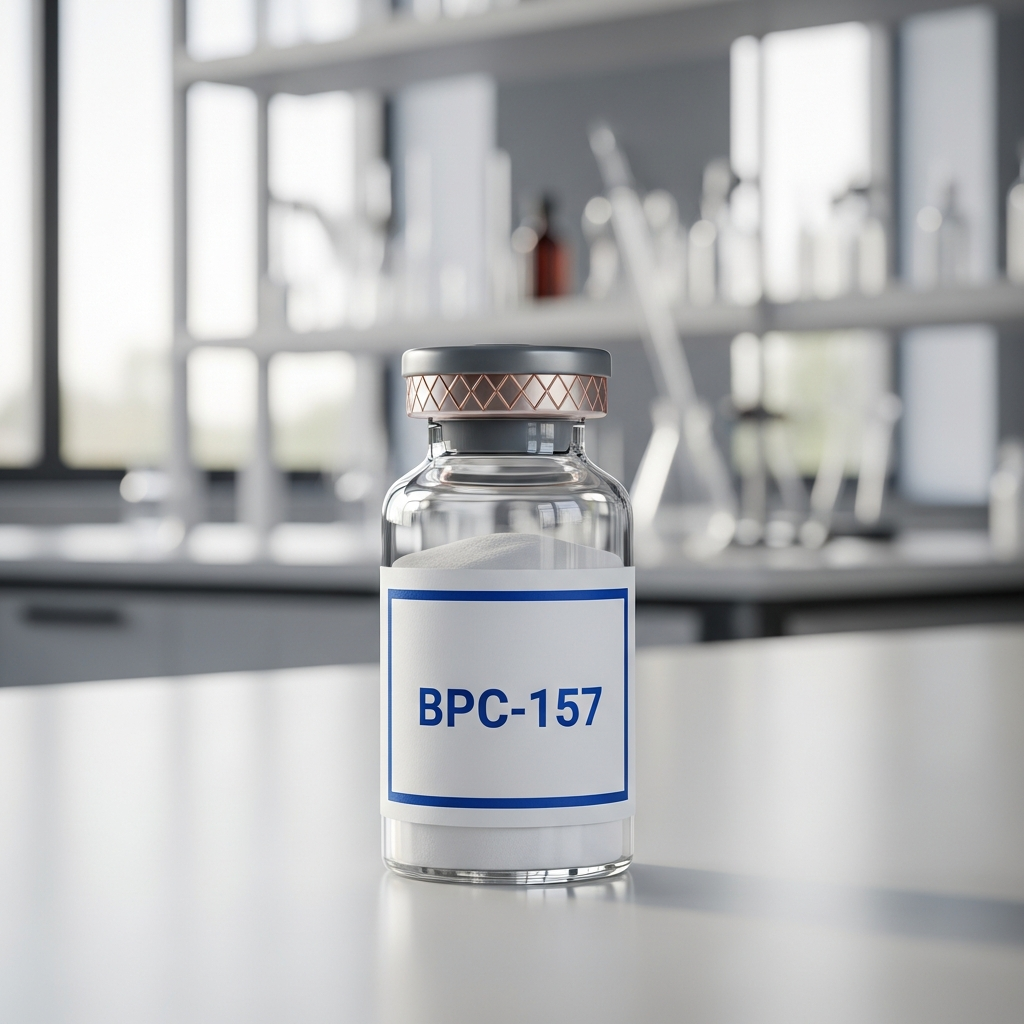
BPC-157
Premium pharmaceutical-grade BPC-157 for advanced research applications
Volume pricing
Per-kit price drops as you scaleAdd 1 more kit
Unlock Lab pricing at $255/kit
extra savings
Free Worldwide Shipping
No minimum order. Customs handled.
Express Delivery
7-14 Days
Ships To
190+ Countries
Customs Handled
99% Success Rate
Stealth Packaging
Cold-Chain
Lab-Grade Guarantee
If an independent HPLC assay of your lot comes back below the purity stated on our published Certificate of Analysis, we reship your order free. Verifiable, not a promise.
99.22% Purity Verified
HPLC / ESI-MS Tested
FOR RESEARCH PURPOSES ONLY. This product is strictly for laboratory and research use. Not for human consumption, medical treatment, or any clinical application. By ordering, you confirm you are a qualified researcher or represent a legitimate research institution.
BPC-157: Key Facts
BPC-157 is a healing recovery research peptide supplied by LyzeLabs as a lyophilized reference standard, strictly for laboratory research use. It is available in 2 formats. Each batch is independently HPLC-verified at 99.22% purity by Janoshik Analytical, with the certificate of analysis published on the lab-results page and matched to the lot number printed on the vial.
| Compound | BPC-157 |
|---|---|
| Research category | Healing Recovery |
| Available formats | 5mg*10vials, 10mg*10vials |
| Purity | 99.22% verified (third-party HPLC, Janoshik) |
| Test method | HPLC / ESI-MS |
| Certificate of analysis | Published online, matched to the vial lot number |
| Intended use | Laboratory research use only. Not for human consumption. |
| Handling | Supplied lyophilized, store per the stability guide |
Vikram Singh
Poland
"Our tissue engineering lab at an institutional research lab has been using LyzeLabs BPC-157 for angiogenesis and wound healing research for 10 months. The angiogenic activity is exceptional - our endothelial tube formation assays show robust capillary-like network formation at 1-10 μM concentrations, matching published BPC-157 literature. HPLC verified >98.7% purity with correct 15 amino acid pentadecapeptide sequence confirmed by mass spec. We measured 2.6x VEGF upregulation via ELISA in fibroblast cultures - this growth factor modulation explains the potent healing effects we observe in our wound healing models. The scratch wound assays demonstrate 35-40% faster wound closure with BPC-157 treatment vs vehicle controls. We're investigating BPC-157's multi-pathway healing mechanism - angiogenesis, collagen synthesis, and anti-inflammatory effects all contribute synergistically. The BC10 and BC20 (10mg, 20mg) specifications are ideal for our extended tissue healing protocols and dose-response studies. Delivery to Uttarakhand takes 12 days with proper cold chain packaging. The 3-variant dosage range (BC5, BC10, BC20) supports pilot angiogenesis assays through multi-week healing research. Essential for tissue repair and regenerative medicine research!"
2025-11-13
Sofia L.
United States
"Mass spec came back clean on our end. The reconstitution notes actually helped."
2025-11-10
B. Andersen
Germany
"Ordered for a comparison run. Values sat where the certificate said."
2025-11-07
About This Product
BPC-157 Research Guide
Body Protection Compound 157
BPC-157 is a pentadecapeptide (15 amino acids) derived from a larger protein originally isolated from human gastric juice. Its full sequence is Gly-Glu-Pro-Pro-Pro-Gly-Lys-Pro-Ala-Asp-Asp-Ala-Gly-Leu-Val, with a molecular weight of 1419.5 Da. It was first characterized by a Croatian research group in the 1990s studying gastroprotective peptides, and what made it interesting was that the protective effects extended far beyond gut tissue.
How BPC-157 Acts
BPC-157 does not bind a single dedicated receptor. It acts on several overlapping systems that together produce the tissue-supportive effects observed across research models.
- Angiogenesis and VEGF upregulation: accelerates capillary ingrowth into damaged tissue in wound research models, driving the VEGF signaling cascade
- Nitric oxide modulation: adjusts local perfusion and inflammatory tone in a context-dependent manner
- Growth hormone receptor upregulation in connective tissue: makes tendon and ligament tissue more responsive to circulating growth factors
- Gut-brain axis effects: improves intestinal barrier function and affects downstream dopaminergic and serotonergic signaling
Research Applications
- Tendon and ligament repair models (Achilles, rotator cuff, patellar tendon)
- Muscle crush injury and exercise damage recovery research
- Gastric ulcer and intestinal anastomosis research (the original research lineage)
- Peripheral nerve crush and transection recovery protocols
- Vascular and endothelial research involving nitric oxide and angiogenesis
- Combination with TB-500 for broad tissue repair protocols via the [BPC + TB blend](/product/bpc-tb-blend)
Quality Standards
- Purity: 99 percent plus verified by independent third-party HPLC (Janoshik Analytical)
- Mass Spec Confirmation: within tolerance of theoretical molecular weight 1419.5 Da
- Form: lyophilized powder in sterile vials
- Storage: known for exceptional solution stability, refrigerator for near-term use, minus 20 degrees Celsius long-term
- Documentation: batch-matched Certificate of Analysis published at /lab-results
For the full mechanism story see the [BPC-157 Research Guide](/blog/bpc-157-research-guide) and the [BPC-157 vs TB-500 comparison](/blog/bpc-157-vs-tb-500-healing-blend-guide).
For research purposes only. Not for human consumption or therapeutic use.
Research Context for BPC-157
Tissue Repair and Recovery Research Context
Healing and recovery peptides are studied across tendon, muscle, nerve, vascular, and gastrointestinal models. Research in this category focuses on angiogenesis, cell migration, growth factor signaling, and the kinetics of repair under controlled conditions. Reproducibility depends heavily on batch consistency and reliable analytical verification.
BPC-157 ships as a lyophilized research reagent through the LyzeLabs™ catalog in the Healing Recovery category, with 2 variant options sized to different research protocols. Every batch is independently verified by Janoshik Analytical, with the full HPLC chromatogram and mass spectrometry confirmation on this batch's Certificate of Analysis and matched to the lot number printed on your vial. Every released batch is listed on the lab results page.
Related Research Guides
BPC-157 Research Guide
Mechanism, tendon and gut research applications, and sourcing for the most reached-for recovery peptide in the catalog.
BPC-157 vs TB-500 and the Blend Format
Why recovery labs use both peptides together and when a premixed blend is the right call.
How to Read a Peptide Certificate of Analysis
The verification routine every research lab should run before accepting a vial.
Other Compounds in the Healing Recovery Category
Frequently Asked Questions
BPC-157
$290