Comparisons
GHK-Cu vs BPC-157: The Collagen Peptide and the Gut Peptide
GHK-Cu and BPC-157 are both repair peptides, studied in different tissues. GHK-Cu is the skin and collagen peptide; BPC-157 is the gut and tendon peptide. Here is how they compare.
LyzeLabs Research Team · Updated · 5 min read
In this guide
GHK-Cu and BPC-157 are both repair peptides, but they are studied in different places. GHK-Cu is a tiny copper-carrying peptide studied mostly in skin and wounds: it builds collagen and helps tissue remodel. BPC-157 is a 15-amino-acid peptide studied mostly in the gut, tendons and ligaments. Both appear together in the GLOW and KLOW blends.
The Short Answer
- GHK-Cu is three amino acids (glycine, histidine, lysine) holding a copper ion. GHK occurs naturally in human plasma, saliva and urine, and its level falls with age (Pickart, 2015). In rat wounds, it raised collagen and the other building materials of new tissue (Maquart, 1993).
- BPC-157 is 15 amino acids, part of a larger protein found in human gastric juice. In rats, it helped injuries heal along the whole gut and in tendons, ligaments and bone (Seiwerth, 2018).
- Choose GHK-Cu for skin, collagen and wound remodeling. Choose BPC-157 for the gut and for connective tissue like tendons.
How Each One Works
GHK-Cu: the collagen builder
GHK binds copper tightly, and the pair works as a unit. It raises collagen and the gel-like materials that fill the space around cells (glycosaminoglycans, including decorin). It also helps clear old, damaged tissue: it raises both the enzymes that break collagen down and the molecules that keep those enzymes in check, which is how tissue remodels. And it draws immune cells and blood-vessel cells to an injury (Pickart, 2015).
In a classic rat study, small chambers placed under the skin were treated with GHK-Cu or with salt water. GHK-Cu raised collagen, total protein, DNA and glycosaminoglycans, more so at higher amounts, and collagen rose twice as much as other proteins. A different three-amino-acid peptide had no effect (Maquart, 1993).
GHK-Cu also has a life outside the lab: it is used in cosmetic skin products. For more, see the GHK-Cu guide.
BPC-157: the gut and tendon peptide
BPC-157 stands for Body Protection Compound 157. In rat tendon cells, it did not make cells divide faster. Instead, it helped them survive stress, spread out and move into a gap, through the FAK-paxillin pathway (Chang, 2011). Across the rat studies, it helped heal injuries from the esophagus to the lower bowel, and improved tendon, ligament and bone healing, in part by growing new blood vessels (Seiwerth, 2018).
For more, see the BPC-157 vs TB-500 guide.
Side-by-Side Comparison
| Feature | GHK-Cu | BPC-157 |
|---|---|---|
| Length | 3 amino acids, plus copper | 15 amino acids |
| Found naturally in | Human plasma, saliva and urine | Human gastric juice, as part of a larger protein |
| Main tissues studied | Skin and wounds | Gut, tendon, ligament and bone |
| Key actions | Builds collagen, remodels tissue, draws repair cells | Helps cells survive and move, grows blood vessels |
| Color | Blue, from the copper | White |
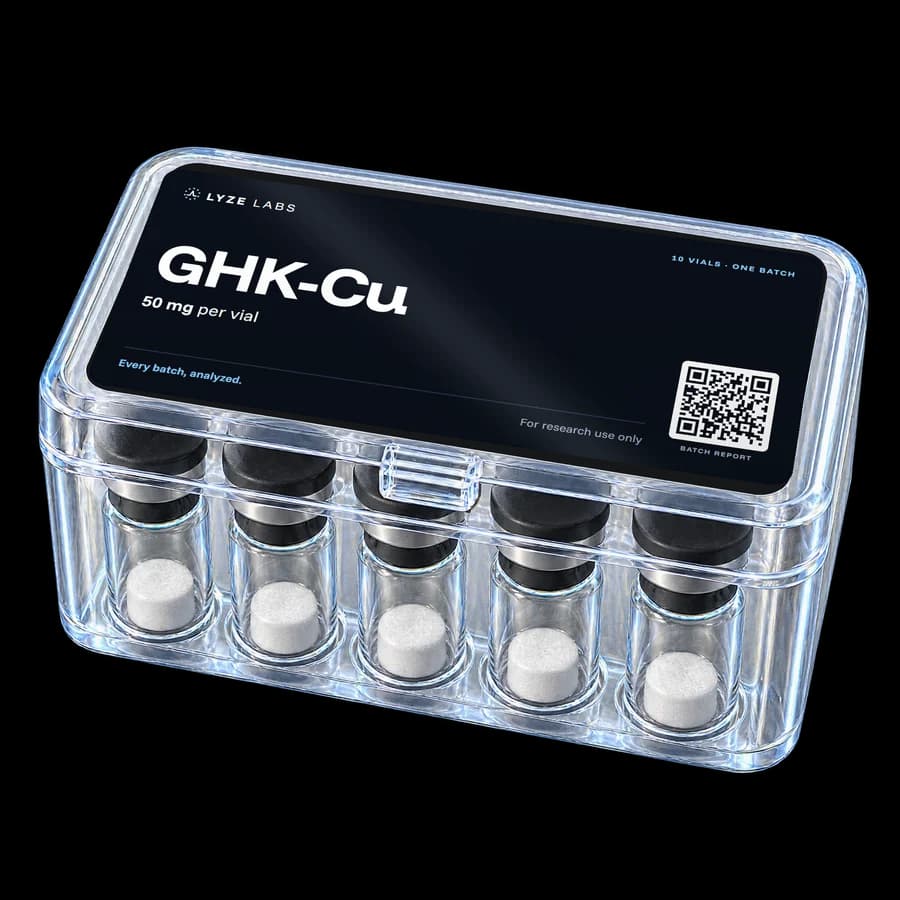
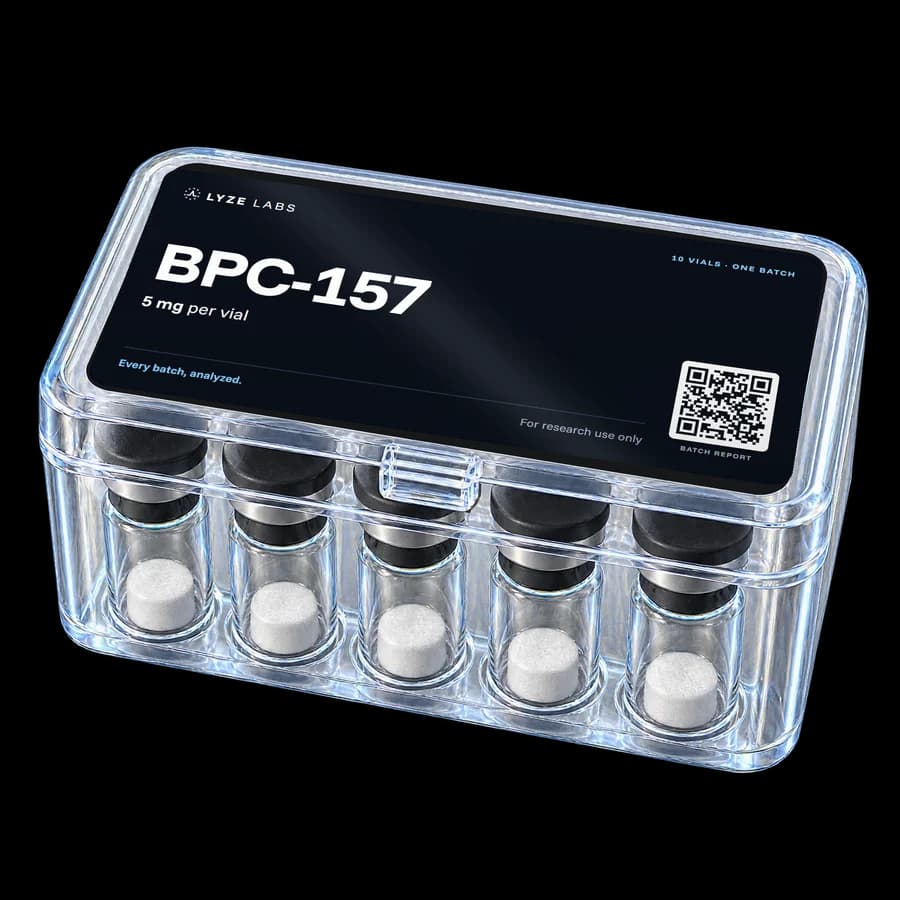
| Our kits | 50 or 100 mg x 10 vials | 5 or 10 mg x 10 vials |
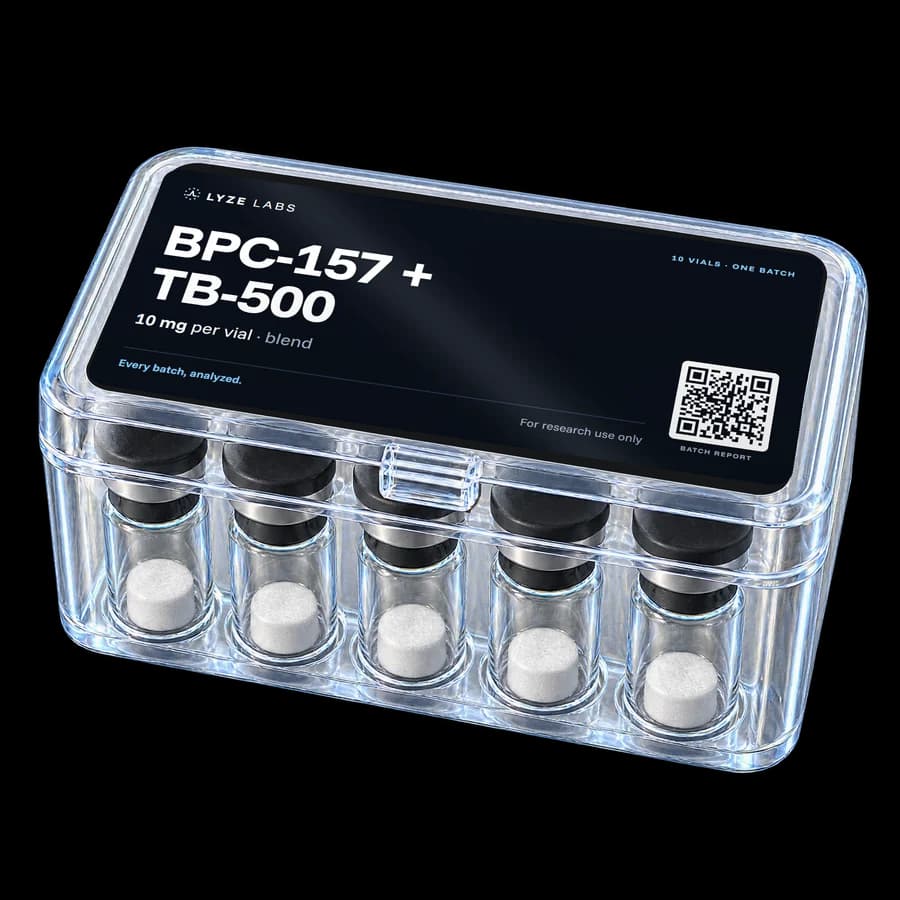
| Blends | GLOW, KLOW | GLOW, KLOW, BPC-157 + TB-500 |
Which One Fits Which Research Question?
Choose GHK-Cu when your question is about skin: collagen, firmness, aging skin, or how a wound remodels. It is also the natural choice for work on the skin's surface, where copper peptides are already used.
Choose BPC-157 when your question is about the gut lining, tendons, ligaments or bone, or about new blood vessel growth.
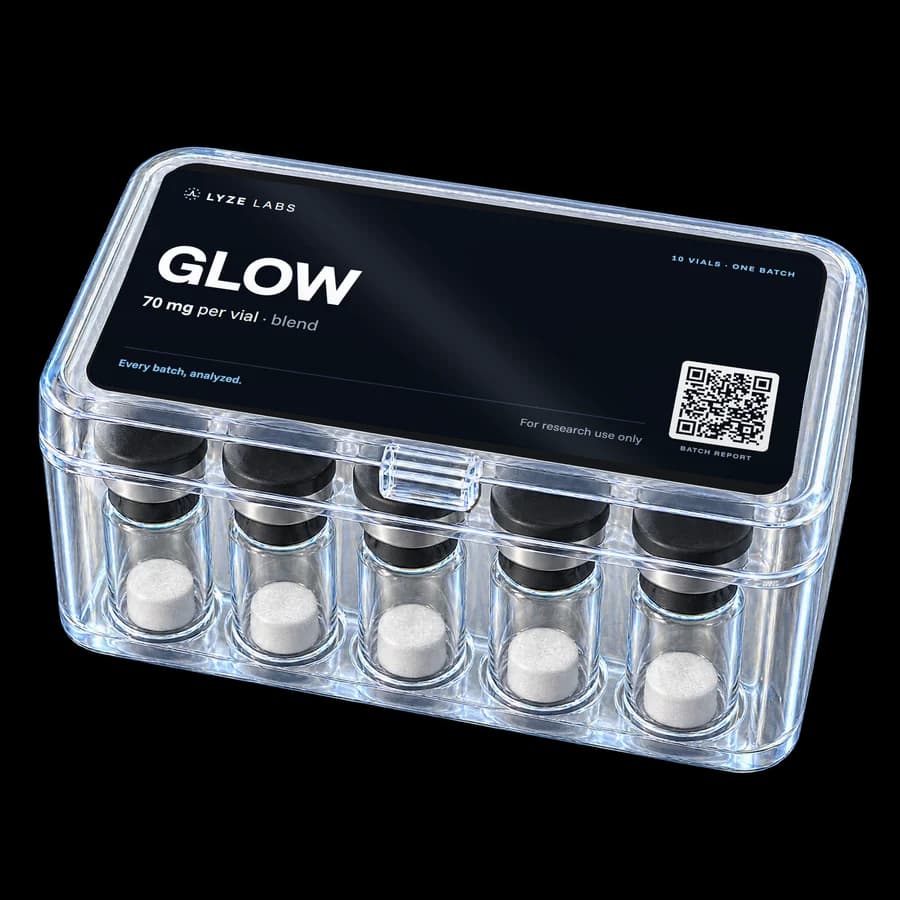
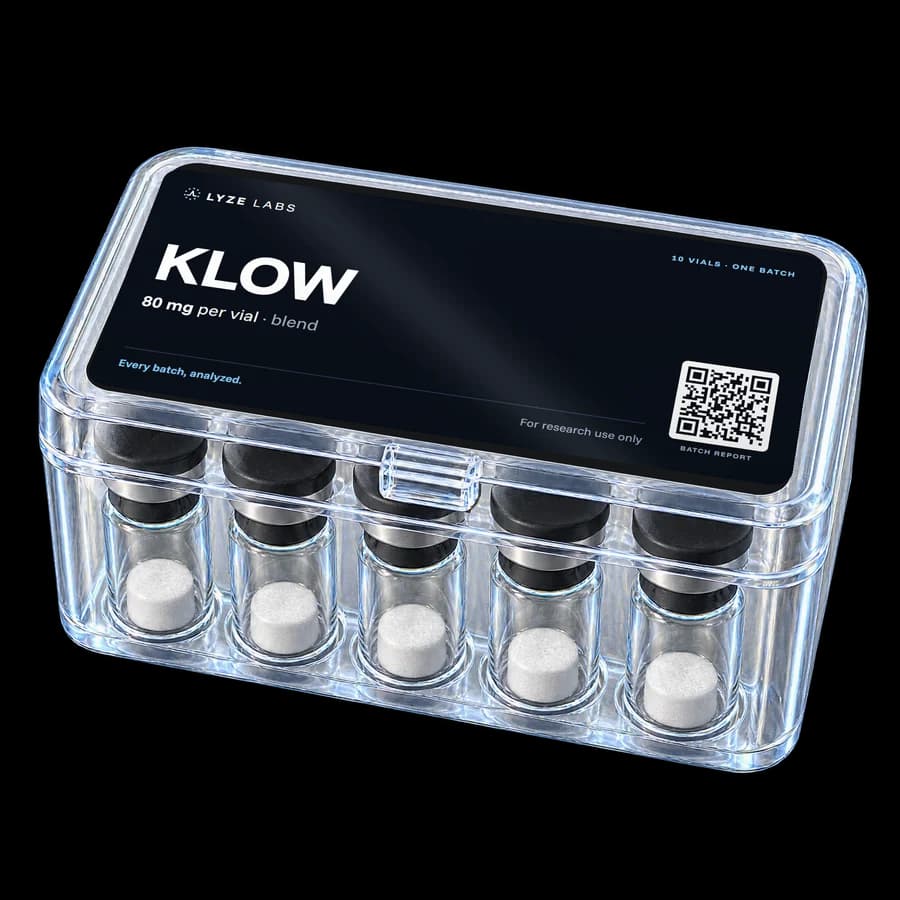
Study both when you want both halves of repair in one model: GHK-Cu for collagen and remodeling, BPC-157 for cell movement and blood supply. The GLOW blend holds both with TB-500 (70 mg per vial), and the KLOW blend adds KPV (80 mg per vial). See the KLOW vs GLOW guide.
Each also comes on its own as a ten-vial kit: GHK-Cu in 50 or 100 mg and BPC-157 in 5 or 10 mg.
Handling Differences
Both arrive as freeze-dried powder and mix with bacteriostatic water. GHK-Cu powder and solution are blue, from the copper; that is normal. GHK-Cu vials hold far more powder than BPC-157 vials, so plan the water volume before you mix. Keep mixed vials in the fridge. See how to reconstitute research peptides.
Frequently Asked Questions
Is GHK-Cu better than BPC-157?
They are studied for different tissues. GHK-Cu has the most data on skin, collagen and wounds. BPC-157 has the most on the gut, tendons, ligaments and bone. The better choice depends on the tissue in your study.
Can GHK-Cu and BPC-157 be studied together?
Yes. The GLOW and KLOW blends both combine them with TB-500, and KLOW adds KPV.
Why is GHK-Cu blue?
The copper ion it carries gives the powder and the mixed solution a blue color.
Does GHK occur naturally in the body?
Yes. GHK is found in human plasma, saliva and urine, and its level falls with age.
Which is better for skin research?
GHK-Cu. It has decades of skin and wound research behind it, including cosmetic studies on firmness, elasticity and fine lines.
Studies Cited
- Pickart L, et al. (2015). GHK peptide as a natural modulator of multiple cellular pathways in skin regeneration. BioMed Research International.
- Maquart FX, et al. (1993). In vivo stimulation of connective tissue accumulation by the tripeptide-copper complex glycyl-L-histidyl-L-lysine-Cu2+ in rat experimental wounds. Journal of Clinical Investigation.
- Chang CH, et al. (2011). The promoting effect of pentadecapeptide BPC 157 on tendon healing involves tendon outgrowth, cell survival, and cell migration. Journal of Applied Physiology.
- Seiwerth S, et al. (2018). BPC 157 and standard angiogenic growth factors. Gastrointestinal tract healing, lessons from tendon, ligament, muscle and bone healing. Current Pharmaceutical Design.
This guide is for education. It is not medical advice. Every compound we supply is for laboratory research only and is not for human use.