Comparisons
Thymosin Alpha-1 vs Thymosin Beta-4: Immune Signal or Repair Signal?
Thymosin alpha-1 and thymosin beta-4 share a name but not a job. Alpha-1 switches on immune responses and is an approved medicine in over 35 countries; beta-4 moves cells to repair tissue. Here is how they compare.
LyzeLabs Research Team · Updated · 5 min read
In this guide
Thymosin alpha-1 and thymosin beta-4 are often grouped together because of the name. Both were first found in extracts of the thymus, the gland where immune T cells mature. They are not related in structure and they do different jobs. Thymosin alpha-1 is an immune signal: it switches on the cells that start an immune response. Thymosin beta-4 is a repair signal: it holds actin inside cells, which lets cells move into a wound and rebuild it.
The Short Answer
- Thymosin alpha-1 (Tα1) is 28 amino acids. It acts through Toll-like receptors on dendritic cells, the immune system's early-warning cells (King, 2016). As a medicine (thymalfasin), it is approved in over 35 countries for hepatitis B and C and as an immune booster (Goldstein, 2009).
- Thymosin beta-4 (Tβ4) is 43 amino acids. It binds actin, the protein cells use to change shape and crawl, and helps cells move into injured tissue, build new blood vessels and form less scar (Goldstein, 2012). TB-500 is the research peptide built on its most active region: seven amino acids, LKKTETQ.
- Choose alpha-1 for immune questions. Choose beta-4 or TB-500 for repair questions.
How Each One Works
Thymosin alpha-1: switching on the immune response
Tα1 was first isolated from thymus tissue as the substance that restored immune function in mice whose thymus had been removed. It acts through Toll-like receptors on two kinds of dendritic cells. These cells sense danger and tell T cells what to attack. Switched on, they release cytokines, the immune system's signaling proteins, and start a response (King, 2016).
That is why Tα1 is studied wherever the immune system is weak: in aging, in infection and in cancer (King, 2016), and as a vaccine adjuvant. Clinical reports also cover severe infections and lung infections in very ill patients, and its use alongside chemotherapy (Goldstein, 2009).
Thymosin beta-4: moving cells to repair
Tβ4 holds actin, the protein that forms the frame cells use to change shape and move. After an injury, platelets, immune cells and many other cell types release it. It protects cells from dying, calms inflammation, draws in stem and progenitor cells that build new blood vessels, and lowers the number of scar-forming cells in a wound. Clinical trials were under way or planned for skin wounds, eye injuries, and heart and brain repair after loss of blood flow (Goldstein, 2012).
TB-500 is the research form built on Tβ4's active region, amino acids 17 to 23 (LKKTETQ), the part linked to actin binding and cell movement. See the BPC-157 vs TB-500 guide.
Side-by-Side Comparison
| Feature | Thymosin alpha-1 | Thymosin beta-4 (TB-500) |
|---|---|---|
| Length | 28 amino acids | 43 amino acids (TB-500: its 7-amino-acid active region) |
| Main job | Switches on immune responses | Moves cells to repair tissue |
| How | Toll-like receptors on dendritic cells | Binds actin inside cells |
| Main research areas | Immune weakness, infection, vaccines, cancer | Wounds, blood vessels, scarring, heart, eye |
| Medical status | Approved in over 35 countries (hepatitis B and C, immune support) | Investigational |
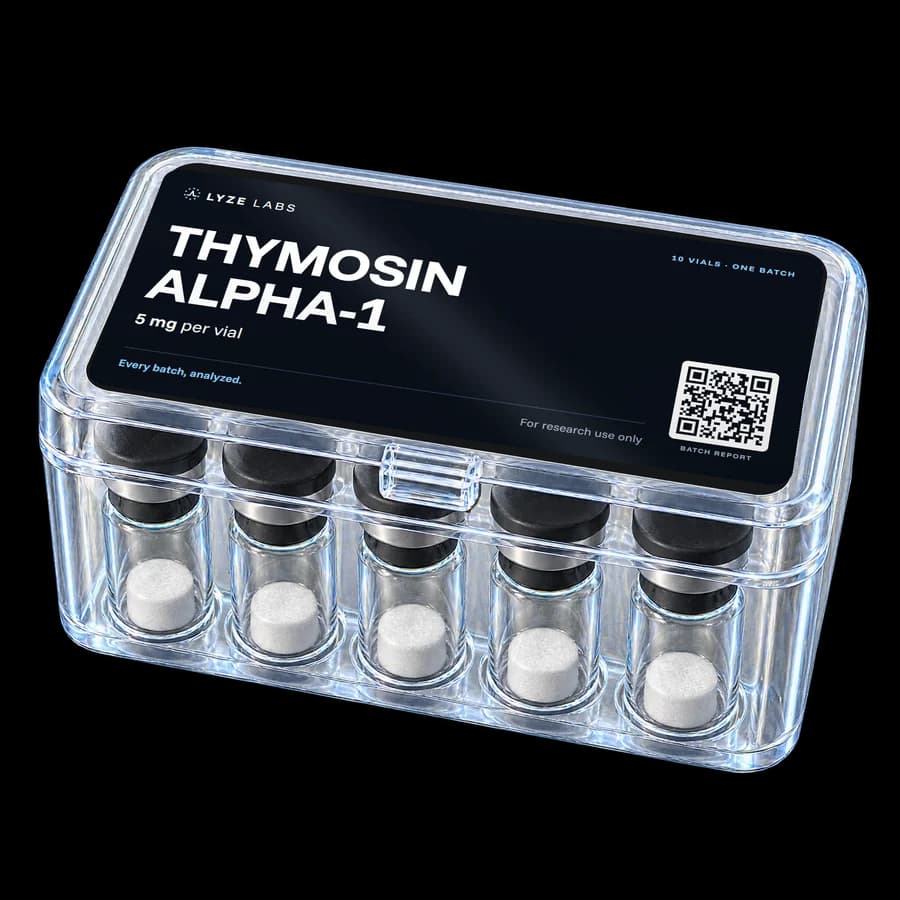
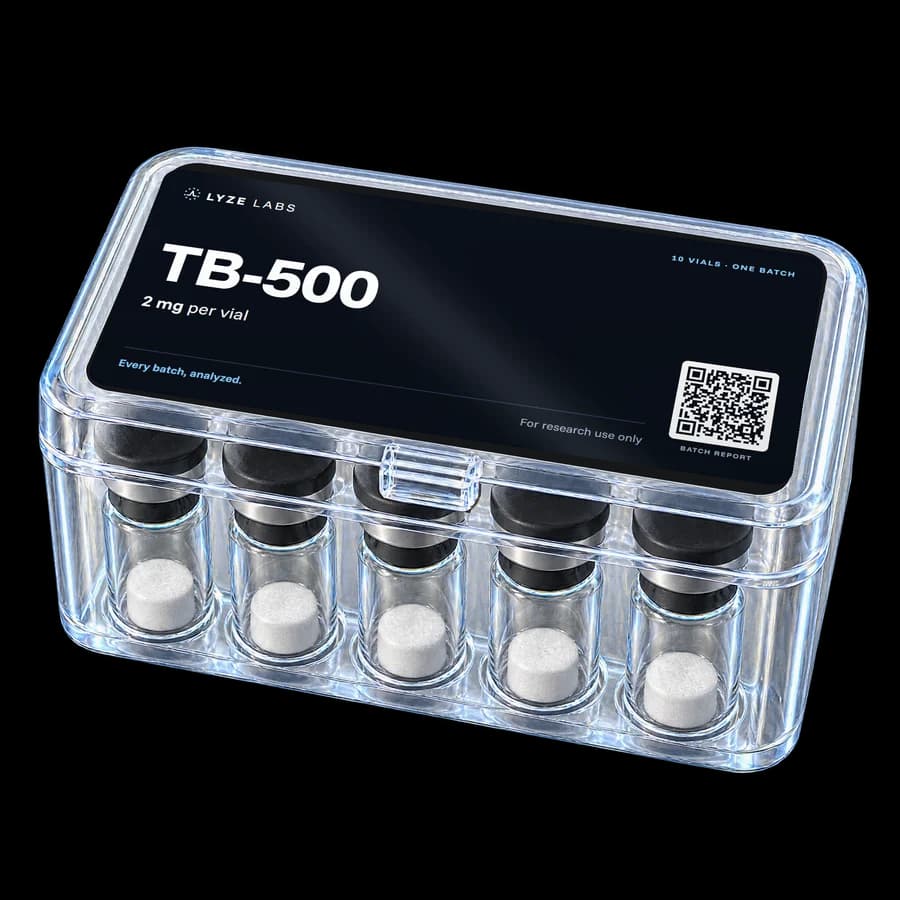
| Our kits | 5 or 10 mg x 10 vials | 2, 5 or 10 mg x 10 vials |
Which One Fits Which Research Question?
Choose thymosin alpha-1 when your question is about the immune system: T cell function, dendritic cells, vaccine response, infection models or immune aging.
Choose thymosin beta-4 (TB-500) when your question is about repair: wound closure, new blood vessels, scarring, or tissue recovery after injury.
Study both when your model has an immune side and a repair side, and you want to see each one's share.
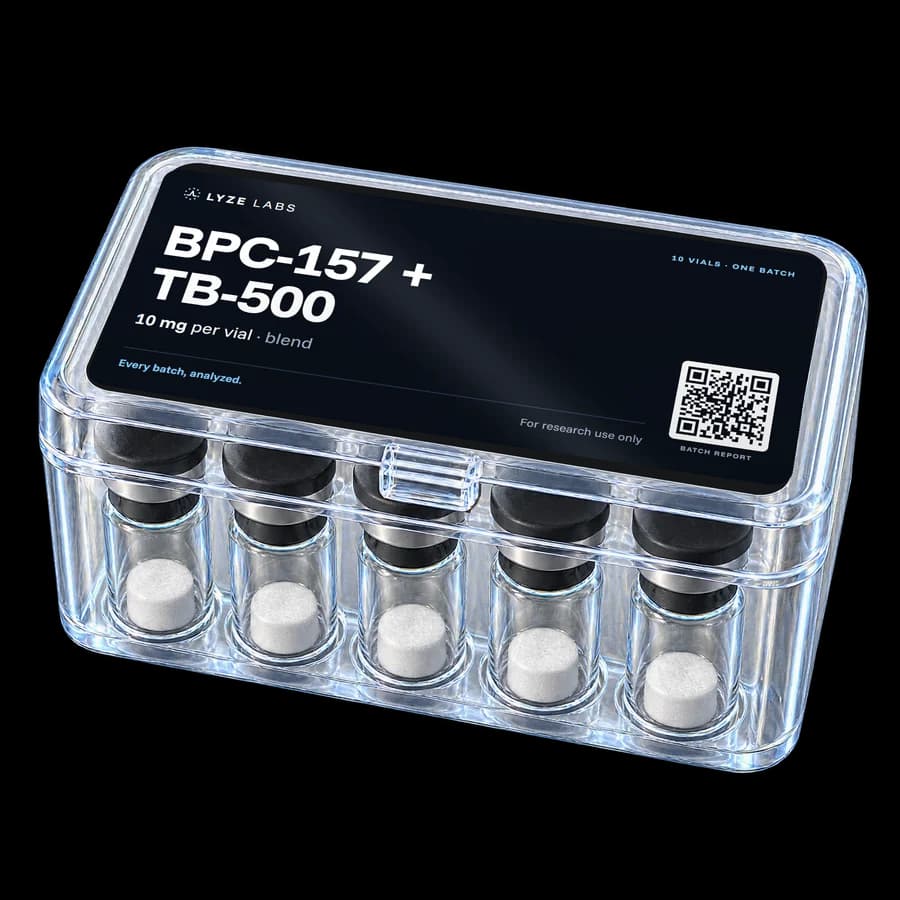
Both come as ten-vial kits: Thymosin Alpha-1 in 5 or 10 mg and TB-500 in 2, 5 or 10 mg. TB-500 is also paired with BPC-157 in the BPC-157 + TB-500 blend.
Handling Differences
Both arrive as freeze-dried powder and mix with bacteriostatic water. Label them clearly: the names differ by one word, and the two do very different things. Keep mixed vials in the fridge. See how to reconstitute research peptides.
Frequently Asked Questions
Are thymosin alpha-1 and thymosin beta-4 the same thing?
No. They share a family name because both were first found in thymus extracts, but they differ in structure and job. Alpha-1 switches on immune responses; beta-4 moves cells to repair tissue.
Is TB-500 the same as thymosin beta-4?
TB-500 is built on thymosin beta-4's most active region, the seven amino acids LKKTETQ. The two names are often used as if they were the same, so check the label and the size.
Which one is an approved medicine?
Thymosin alpha-1, as thymalfasin, is approved in over 35 countries for hepatitis B and C and as an immune booster. Thymosin beta-4 is not approved; it has been studied in clinical trials.
Which is better for healing research?
Thymosin beta-4 and TB-500, because repair is their job: cell movement, new blood vessels and less scarring. Alpha-1 is the immune tool.
Why are both called thymosins?
Both were first isolated from extracts of the thymus, the gland where T cells mature. The name stuck, even though beta-4 turned out to be made by many cell types all over the body.
Studies Cited
- King R, Tuthill C (2016). Immune modulation with thymosin alpha 1 treatment. Vitamins and Hormones.
- Goldstein AL, Goldstein AL (2009). From lab to bedside: emerging clinical applications of thymosin alpha 1. Expert Opinion on Biological Therapy.
- Goldstein AL, et al. (2012). Thymosin β4: a multi-functional regenerative peptide. Basic properties and clinical applications. Expert Opinion on Biological Therapy.
This guide is for education. It is not medical advice. Every compound we supply is for laboratory research only and is not for human use.