Comparisons
Tesamorelin vs CJC-1295: Two GHRH Analogs, Two Very Different Clocks
Tesamorelin and CJC-1295 both tell the pituitary to release growth hormone. Tesamorelin lasts about half an hour; CJC-1295 with DAC lasts about a week. Here is what that changes.
LyzeLabs Research Team · Updated · 5 min read
In this guide
Tesamorelin and CJC-1295 are both lab-made copies of GHRH, the hormone that tells the pituitary gland to release growth hormone. Both raise growth hormone and then IGF-1. The big difference is how long they last: tesamorelin is cleared in about half an hour, while CJC-1295 with DAC stays in the blood for about a week. That one difference shapes how each is studied.
The Short Answer
- Tesamorelin is the full 44-amino-acid GHRH with a small fatty group that protects it from enzymes. Half-life about 26 to 38 minutes. It has the strongest trial data of any GHRH analog, on visceral (deep belly) fat, and it is an approved medicine (Egrifta) for one use.
- CJC-1295 with DAC is a shortened GHRH (the first 29 amino acids, modified) with a chemical hook that binds albumin in the blood. Half-life about 6 to 8 days. A single administration keeps growth hormone and IGF-1 raised for days.
- CJC-1295 without DAC (also called Mod GRF 1-29) has no albumin hook and lasts minutes, like tesamorelin. See the CJC-1295 DAC vs no DAC guide.
How Each One Works
Tesamorelin
Natural GHRH is broken down within minutes by the enzyme DPP-4. Tesamorelin keeps the full 44-amino-acid chain and adds a trans-3-hexenoic acid group to the front, which shields it. It binds the GHRH receptor on the pituitary, which releases the body's own growth hormone in natural pulses.
Its signature result: in people with HIV and excess belly fat, 26 weeks of tesamorelin cut visceral fat by 15.2% while it rose 5.0% on placebo, and IGF-1 rose 81% (Falutz, 2007). See the tesamorelin guide for more.
CJC-1295 with DAC
CJC-1295 starts from the first 29 amino acids of GHRH, the active part, with a few changes for stability. Its "drug affinity complex" (DAC) is a reactive group that latches onto albumin, the most common protein in blood, at one specific spot (Jetté, 2005). Riding on albumin, it escapes both the enzymes and the kidneys.
In healthy adults, a single administration raised growth hormone 2 to 10 times for 6 days or more and IGF-1 1.5 to 3 times for 9 to 11 days, with an estimated half-life of 5.8 to 8.1 days (Teichman, 2006). Notably, growth hormone still came in pulses: the pulses kept their size and timing, while the level between them rose 7.5-fold, mean growth hormone rose 46% and IGF-1 rose 45% (Ionescu, 2006).
Side-by-Side Comparison
| Feature | Tesamorelin | CJC-1295 with DAC |
|---|---|---|
| Based on | Full GHRH (44 amino acids) | GHRH 1-29, modified |
| How it lasts | Fatty group blocks enzymes | Binds albumin in the blood |
| Half-life | ~26 to 38 minutes | ~6 to 8 days |
| Growth hormone pattern | Short, natural pulses | Pulses kept, higher baseline between them |
| IGF-1 rise in trials | +81% (26 weeks) | 1.5 to 3 times for 9 to 11 days after one administration |
| Strongest evidence | Visceral and liver fat (controlled trials) | Growth hormone and IGF-1 in healthy adults |
| Status | Approved (Egrifta) for HIV-related belly fat | Investigational |
| Our kits | 2, 5, 10 mg x 10 vials | 2, 5 mg x 10 vials |
Which One Fits Which Research Question?
Choose tesamorelin when your outcome is visceral fat, liver fat or another endpoint where the trial data already exists, or when you need short, natural growth hormone pulses you can time precisely.
Choose CJC-1295 with DAC when you want growth hormone and IGF-1 raised steadily over days from a single administration, or you are studying what a higher growth hormone baseline does.
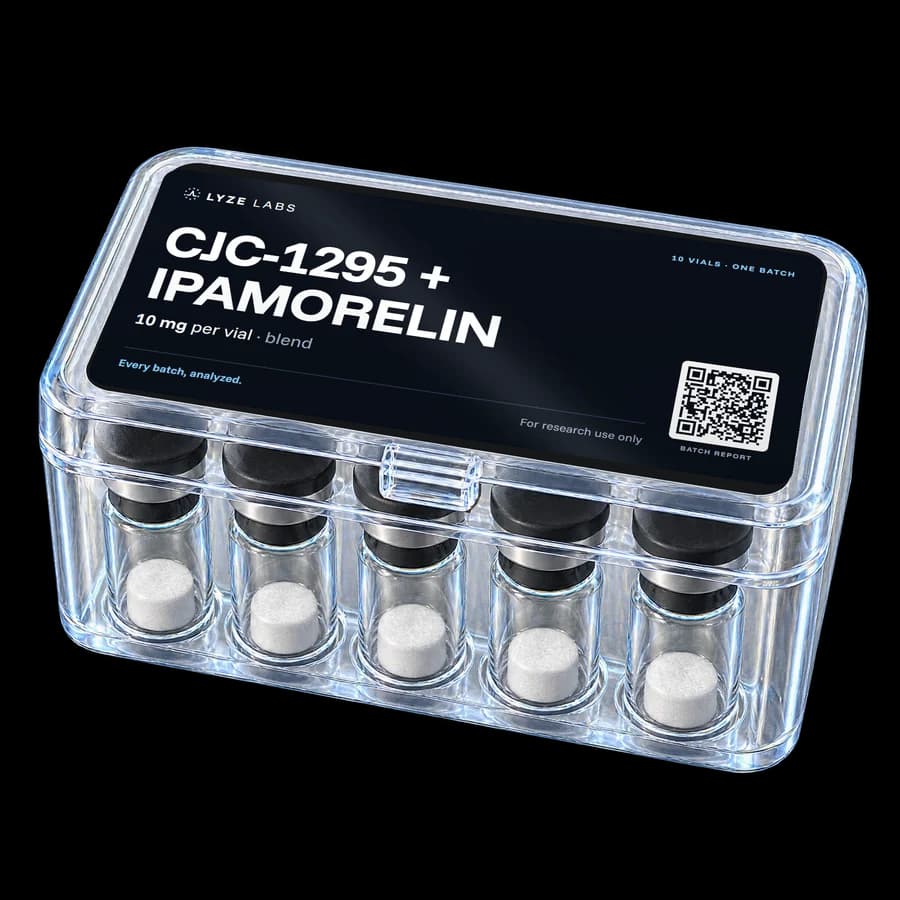
Choose CJC-1295 without DAC for short pulses with a simpler, shorter GHRH piece, often paired with a ghrelin-type releaser like ipamorelin. See the CJC-1295 and Ipamorelin blend.
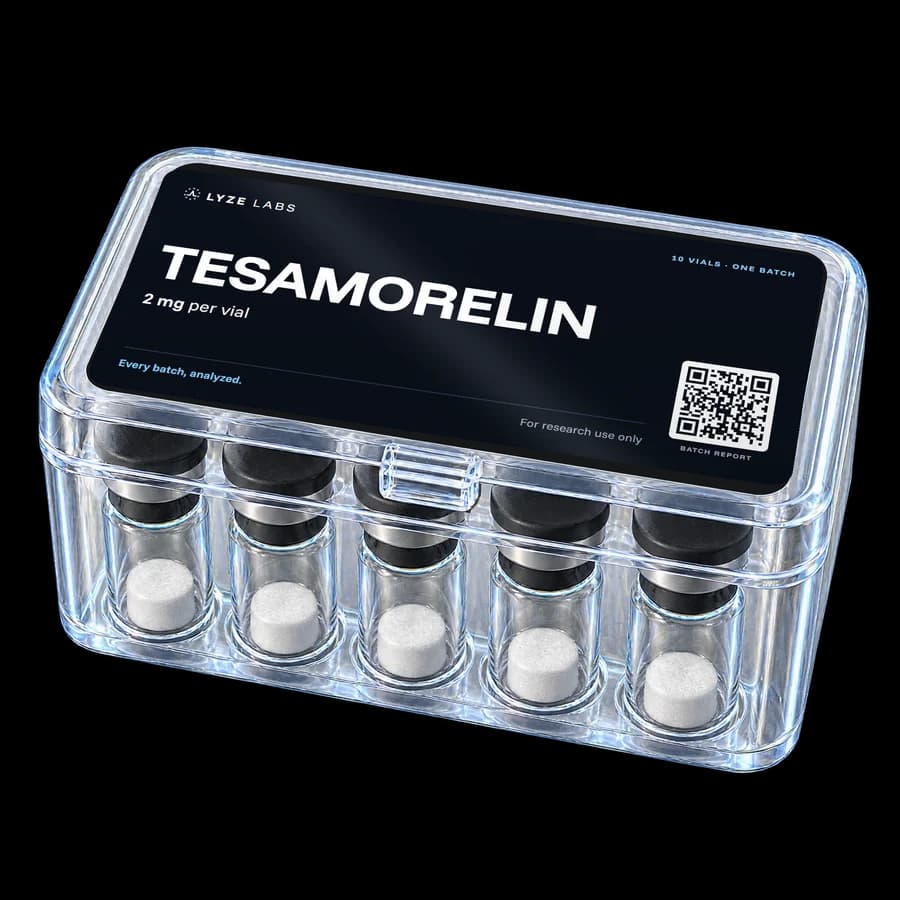
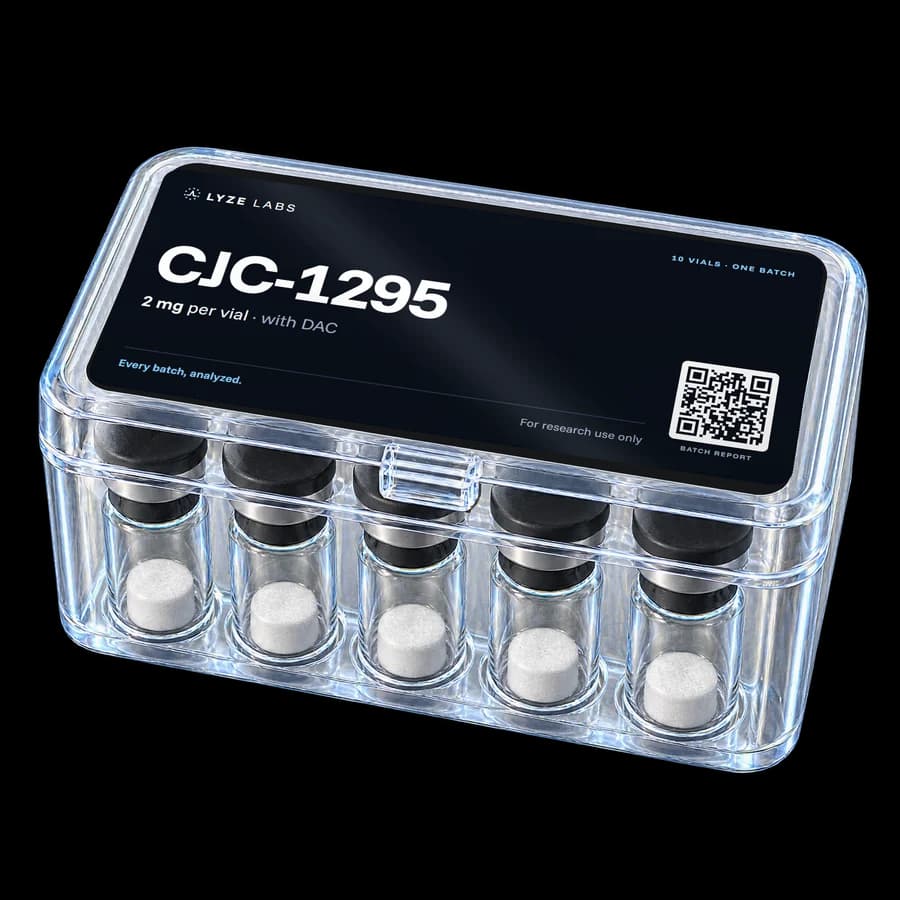
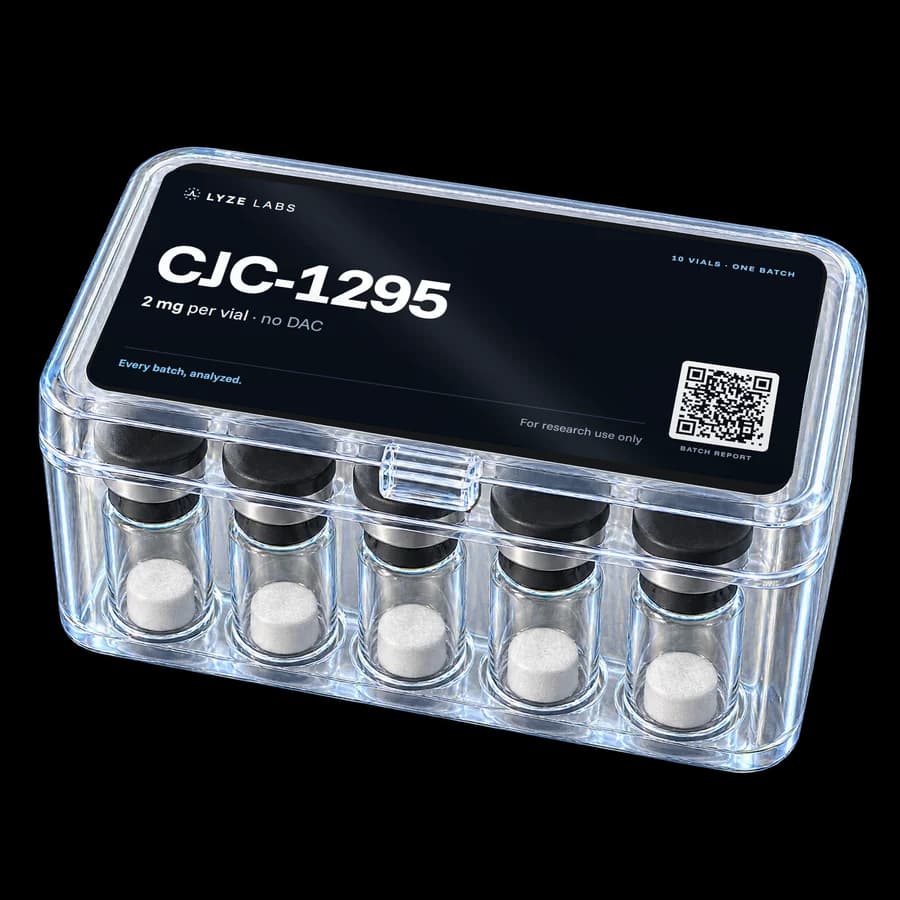
Each comes as a ten-vial kit: tesamorelin in 2, 5 or 10 mg, CJC-1295 with DAC in 2 or 5 mg, and CJC-1295 without DAC in 2, 5 or 10 mg.
Handling Differences
Both arrive as freeze-dried powder and mix with bacteriostatic water. Label CJC-1295 vials clearly as "with DAC" or "without DAC": the two last very different lengths of time and are easy to mix up. Keep mixed vials in the fridge. See how to reconstitute research peptides.
Frequently Asked Questions
Is tesamorelin better than CJC-1295?
For visceral fat research, tesamorelin has far stronger evidence: controlled trials and an approval for HIV-related belly fat. For steady growth hormone and IGF-1 over days from a single administration, CJC-1295 with DAC fits better. They answer different questions.
Do tesamorelin and CJC-1295 work the same way?
Both bind the GHRH receptor on the pituitary and make it release the body's own growth hormone. The difference is how long they stay active: tesamorelin for minutes, CJC-1295 with DAC for days.
Does CJC-1295 with DAC stop natural growth hormone pulses?
Not in the human study that measured it. After a single administration, the pulses kept their size and timing; what rose was the growth hormone level between pulses, 7.5-fold.
What is the half-life of tesamorelin and CJC-1295?
Tesamorelin: about 26 to 38 minutes. CJC-1295 with DAC: about 6 to 8 days. CJC-1295 without DAC: minutes.
Can tesamorelin and CJC-1295 be studied together?
They act on the same receptor, so combining them adds little. Labs more often pair one GHRH analog with a ghrelin-type releaser such as ipamorelin, which works through a different receptor.
Studies Cited
- Falutz J, et al. (2007). Metabolic effects of a growth hormone-releasing factor in patients with HIV. New England Journal of Medicine.
- Jetté L, et al. (2005). Human growth hormone-releasing factor (hGRF)1-29-albumin bioconjugates activate the GRF receptor on the anterior pituitary in rats: identification of CJC-1295 as a long-lasting GRF analog. Endocrinology.
- Teichman SL, et al. (2006). Prolonged stimulation of growth hormone and IGF-I secretion by CJC-1295, a long-acting analog of GH-releasing hormone, in healthy adults. Journal of Clinical Endocrinology and Metabolism.
- Ionescu M, Frohman LA (2006). Pulsatile secretion of growth hormone persists during continuous stimulation by CJC-1295, a long-acting GH-releasing hormone analog. Journal of Clinical Endocrinology and Metabolism.
This guide is for education. It is not medical advice. Every compound we supply is for laboratory research only and is not for human use.