Comparisons
CJC-1295 With DAC vs Without DAC: Days or Minutes?
CJC-1295 with DAC and without DAC share the same GHRH core. The DAC version binds albumin in the blood and lasts about a week; the version without DAC lasts minutes. Here is what that changes.
LyzeLabs Research Team · Updated · 6 min read
In this guide
CJC-1295 comes in two forms, and they behave very differently. Both start from the same core: the first 29 amino acids of GHRH, the hormone that tells the pituitary to release growth hormone, with four amino acids changed to make it more stable. The version with DAC carries a small chemical hook that binds albumin in the blood, so it lasts about a week. The version without DAC has no hook and lasts minutes.
The Short Answer
- CJC-1295 with DAC binds albumin. In healthy adults its half-life was about 6 to 8 days, and growth hormone and IGF-1 stayed raised for days after a single administration (Teichman, 2006).
- CJC-1295 without DAC is the same modified GHRH core without the hook, also called Mod GRF 1-29. Its half-life is measured in minutes, so it gives a short growth hormone pulse, much like the body's own.
- Choose by the pattern you want: a raised baseline that lasts days, or short pulses you time yourself.
Where the Names Come From
CJC-1295 was named by ConjuChem, the company that made it. In their 2005 paper, CJC-1295 meant the version with the albumin hook: GHRH 1-29 with four amino acid changes and an extra lysine at the end carrying a maleimide group (Jetté, 2005). The version without that hook is properly called Modified GRF (1-29), but labs widely call it "CJC-1295 without DAC". Both names are in use, so check which one a paper or a label means.
DAC stands for Drug Affinity Complex: the reactive group that bonds to albumin.
How Each One Works
Both forms bind the GHRH receptor on the pituitary and make it release the body's own growth hormone, which then raises IGF-1. Natural GHRH is broken down within minutes by the enzyme DPP-4. The four changes in the core make it sturdier than natural GHRH. The DAC is what turns minutes into days.
With DAC: riding on albumin
Once in the blood, the DAC bonds to albumin at one spot, cysteine 34. Albumin stays in the blood for weeks, so CJC-1295 rides along. In rats, it was still in the blood after 72 hours, and it released four times more growth hormone over two hours than plain GHRH 1-29 (Jetté, 2005).
In healthy adults, a single administration raised growth hormone 2 to 10 times for 6 days or more, and IGF-1 1.5 to 3 times for 9 to 11 days. With repeated administration, IGF-1 stayed above baseline for up to 28 days (Teichman, 2006). Growth hormone still came in pulses: the pulses kept their size and timing, while the level between them rose 7.5-fold (Ionescu, 2006).
Without DAC: short pulses
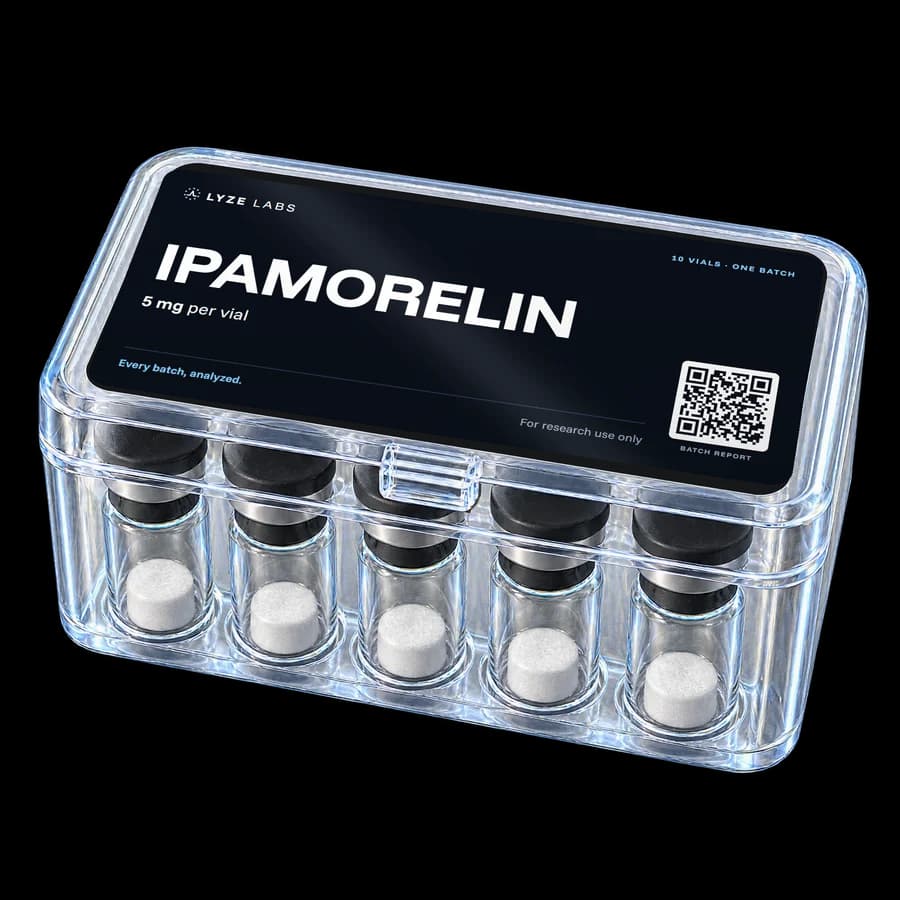
Without the hook, the modified core is cleared like any small peptide, within minutes. It gives a short rise in growth hormone, closer to the body's own pulse. It is often paired with a ghrelin-type releaser such as ipamorelin, which works through a different receptor. Releasers of that kind boost the brain's own GHRH signal and block somatostatin, the brake on growth hormone (Ghigo, 2001), so the two work as a team.
A caution: almost all published human data on "CJC-1295" is on the DAC version. The version without DAC has far less of its own.
Side-by-Side Comparison
| Feature | With DAC | Without DAC (Mod GRF 1-29) |
|---|---|---|
| Core | GHRH 1-29, four amino acids changed | The same |
| Extra part | Lysine with an albumin-binding group | None |
| Binds albumin | Yes | No |
| Half-life | ~6 to 8 days (healthy adults) | Minutes |
| Growth hormone pattern | Raised baseline for days, pulses kept | Short pulse, then back to baseline |
| Published human data | Studies in healthy adults | Little |
| Common pairing | Usually studied alone | With ipamorelin or another ghrelin-type releaser |
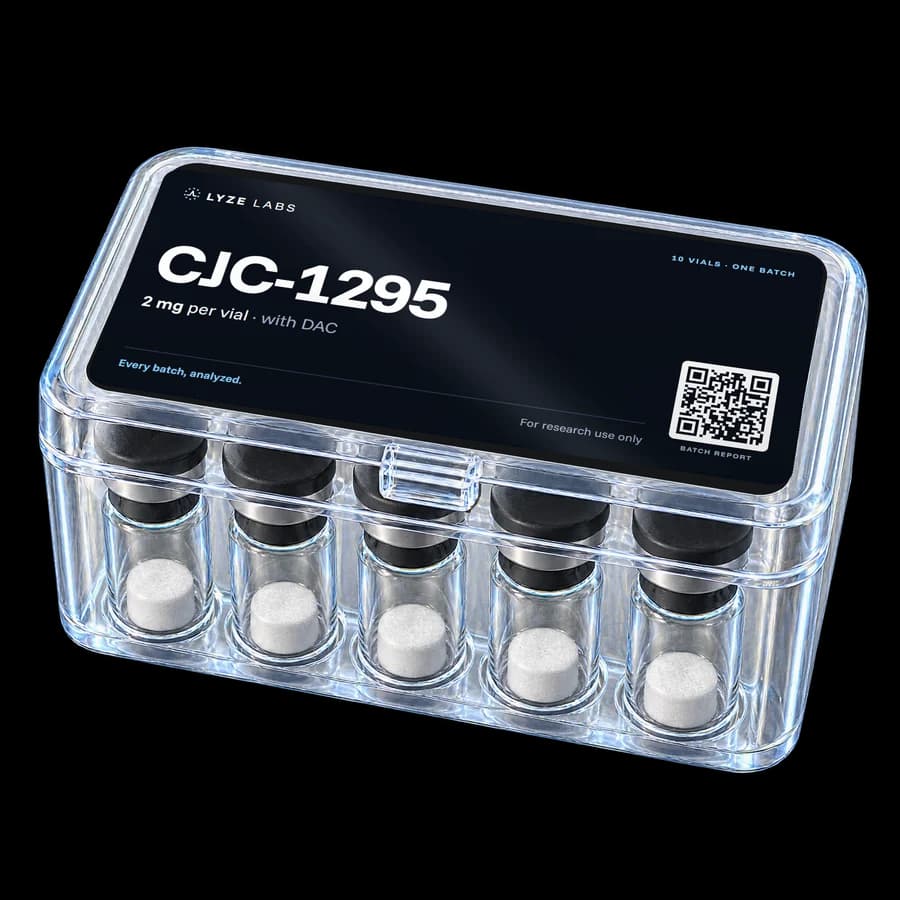
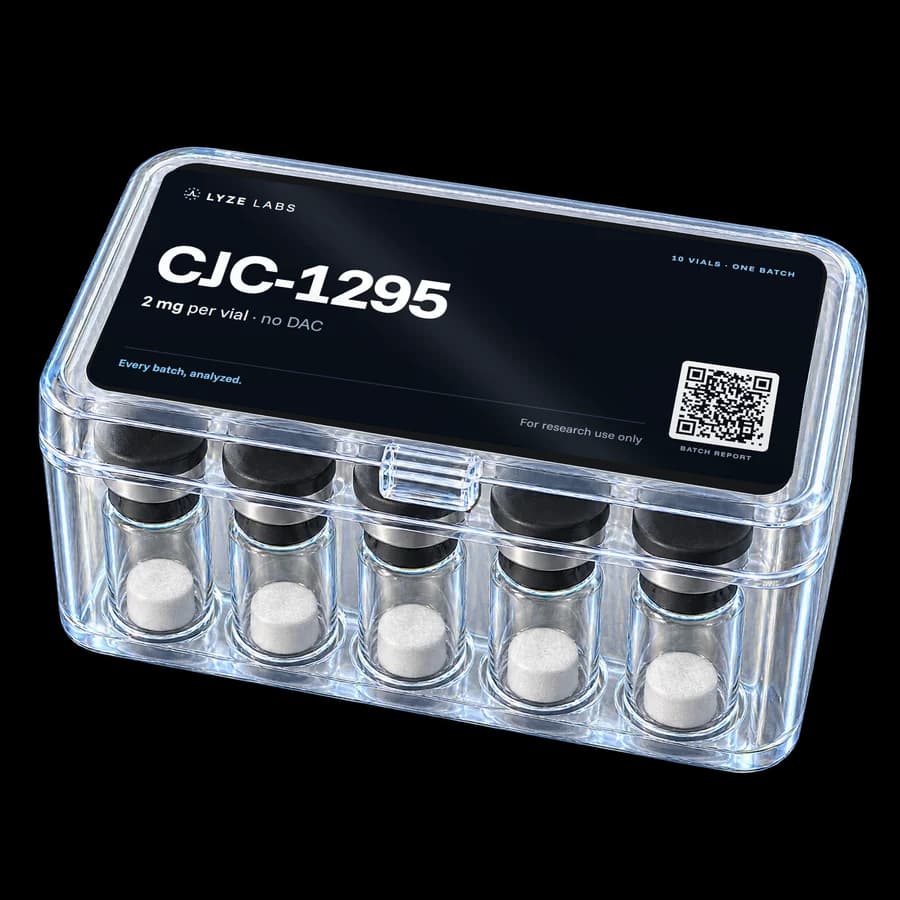
| Our kits | 2 or 5 mg x 10 vials | 2, 5 or 10 mg x 10 vials |
Which One Fits Which Research Question?
Choose with DAC when you want growth hormone and IGF-1 raised steadily over days, with few administrations, or you are studying what a higher baseline does.
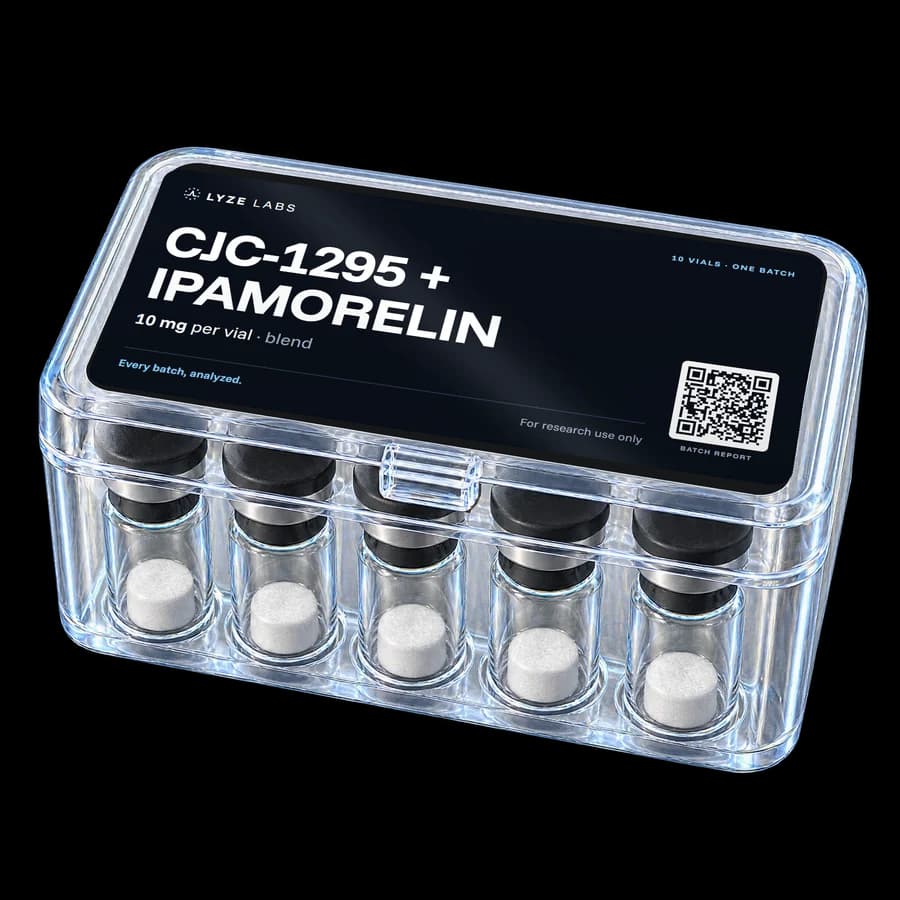
Choose without DAC when you want short pulses that copy the body's own rhythm, you need tight control over timing, or you are pairing it with a ghrelin-type releaser. The CJC-1295 and Ipamorelin blend holds 5 mg of each.
Both come as ten-vial kits: CJC-1295 with DAC and CJC-1295 without DAC. For another GHRH analog with strong trial data, see tesamorelin vs CJC-1295.
Handling Differences
Both arrive as freeze-dried powder and mix with bacteriostatic water. Label every vial "with DAC" or "without DAC": the powders look the same, and a mix-up changes a study's timing from minutes to days. Keep mixed vials in the fridge. See how to reconstitute research peptides.
Frequently Asked Questions
What does DAC mean in CJC-1295?
Drug Affinity Complex: a reactive group on an extra lysine that bonds to albumin in the blood. It turns a peptide that lasts minutes into one that lasts about a week.
Is CJC-1295 without DAC the same as Mod GRF 1-29?
Yes. Both names mean the same modified GHRH core without the albumin hook. Strictly, the name CJC-1295 belongs to the DAC version, but "CJC-1295 without DAC" is widely used.
Which is better, CJC-1295 with or without DAC?
Neither is better overall. With DAC keeps growth hormone and IGF-1 raised for days after a single administration. Without DAC gives short pulses you time yourself. Pick the pattern your study needs.
Does CJC-1295 with DAC stop natural growth hormone pulses?
Not in the human study that measured it. The pulses kept their size and timing; the level between them rose 7.5-fold.
Why is CJC-1295 without DAC paired with ipamorelin?
They work through two different receptors. Ipamorelin acts on the ghrelin receptor, which boosts the GHRH signal and blocks the brake on growth hormone, so the pair releases more than either one alone tends to.
Studies Cited
- Jetté L, et al. (2005). Human growth hormone-releasing factor (hGRF)1-29-albumin bioconjugates activate the GRF receptor on the anterior pituitary in rats: identification of CJC-1295 as a long-lasting GRF analog. Endocrinology.
- Teichman SL, et al. (2006). Prolonged stimulation of growth hormone and IGF-I secretion by CJC-1295, a long-acting analog of GH-releasing hormone, in healthy adults. Journal of Clinical Endocrinology and Metabolism.
- Ionescu M, Frohman LA (2006). Pulsatile secretion of growth hormone persists during continuous stimulation by CJC-1295, a long-acting GH-releasing hormone analog. Journal of Clinical Endocrinology and Metabolism.
- Ghigo E, et al. (2001). Biologic activities of growth hormone secretagogues in humans. Endocrine.
This guide is for education. It is not medical advice. Every compound we supply is for laboratory research only and is not for human use.