Comparisons
Kisspeptin vs Gonadorelin vs HCG: Three Links in One Hormone Chain
Kisspeptin, gonadorelin and HCG all raise sex hormones, from three different links of one chain: the brain, the pituitary and the gonads. Here is how they differ and which fits which research question.
LyzeLabs Research Team · Updated · 6 min read
In this guide
The reproductive hormones run on a chain of command, the HPG axis: the hypothalamus in the brain signals the pituitary, and the pituitary signals the gonads (the testes or ovaries). Kisspeptin, gonadorelin and HCG each act on a different link. Kisspeptin works at the top, on the brain cells that release GnRH. Gonadorelin is GnRH itself, acting on the pituitary. HCG skips both and acts on the gonads directly, the way LH does.
The Short Answer
- Kisspeptin-10 switches on the GnRH-releasing neurons in the hypothalamus through the kisspeptin receptor (KISS1R, once called GPR54). People born with a broken receptor do not go through normal puberty (Seminara, 2003).
- Gonadorelin is a lab-made copy of GnRH, 10 amino acids long. It tells the pituitary to release LH and FSH, but only when it arrives in pulses: a constant supply shuts the pituitary down (Belchetz, 1978).
- HCG is a large hormone that acts on the LH receptor in the testes and ovaries, so it raises sex hormones directly. It lasts days: a half-life of about 5.8 days in a 2024 study in men (Handelsman, 2024).
How Each One Works
Kisspeptin: the top switch
Kisspeptin is made by neurons in the hypothalamus. It switches on the neurons that release GnRH, which sets the whole chain going. Kisspeptin-10 is the shortest active form: the last 10 amino acids of the full 54-amino-acid kisspeptin. For more, see the kisspeptin-10 guide.
Its importance shows in human genetics. Families with a broken kisspeptin receptor had low sex hormones and did not go through normal puberty, and mice without the receptor stayed reproductively immature (Seminara, 2003).
Recent human studies:
- In healthy men, kisspeptin-10 and kisspeptin-54 raised LH and FSH less than GnRH did, in what the authors suggested may be a more natural pattern (Jayasena, 2015).
- As an IVF trigger, kisspeptin-54 matured eggs in 95% of women at high risk of ovarian overstimulation, and none developed moderate or severe overstimulation syndrome (Abbara, 2015).
- A kisspeptin-54 test told apart men born with a hypothalamic hormone disorder from healthy men in every case, better than a GnRH test did (Abbara, 2021).
- Like GnRH, kisspeptin works best in bursts. In healthy men, kisspeptin-10 given nonstop for 5 days stopped raising LH and FSH, while 8 hours a day for 12 days kept them raised (Yeung, 2026).
Kisspeptin given into the nose also raised these hormones quickly in people (Mills, 2025).
Gonadorelin: the pituitary signal
Gonadorelin has the same 10-amino-acid sequence as natural GnRH. It binds GnRH receptors on the pituitary, which then release LH and FSH.
Timing matters more than amount. In a classic monkey study, a steady supply of GnRH failed to keep LH and FSH going, while one pulse an hour restored them, and switching back to a steady supply shut them down again (Belchetz, 1978). The same rule is why long-acting GnRH drugs are used to switch the system off.
HCG: straight to the gonads
HCG (human chorionic gonadotropin) is the pregnancy hormone. It is a large two-chain glycoprotein that binds the same receptor as LH, in the testes and ovaries, so it bypasses the brain and the pituitary. In men, it raised testosterone, and it lasts days rather than minutes (Handelsman, 2024). Its strength is given in IU.
Side-by-Side Comparison
| Feature | Kisspeptin-10 | Gonadorelin | HCG |
|---|---|---|---|
| Link in the chain | Hypothalamus (GnRH neurons) | Pituitary | Testes and ovaries |
| Receptor | Kisspeptin receptor (KISS1R) | GnRH receptor | LH receptor |
| Size | 10 amino acids | 10 amino acids | Large two-chain glycoprotein |
| How long it lasts | Short | Short; needs pulses | Days (half-life ~5.8 days) |
| Measured in | mg | mg | IU |
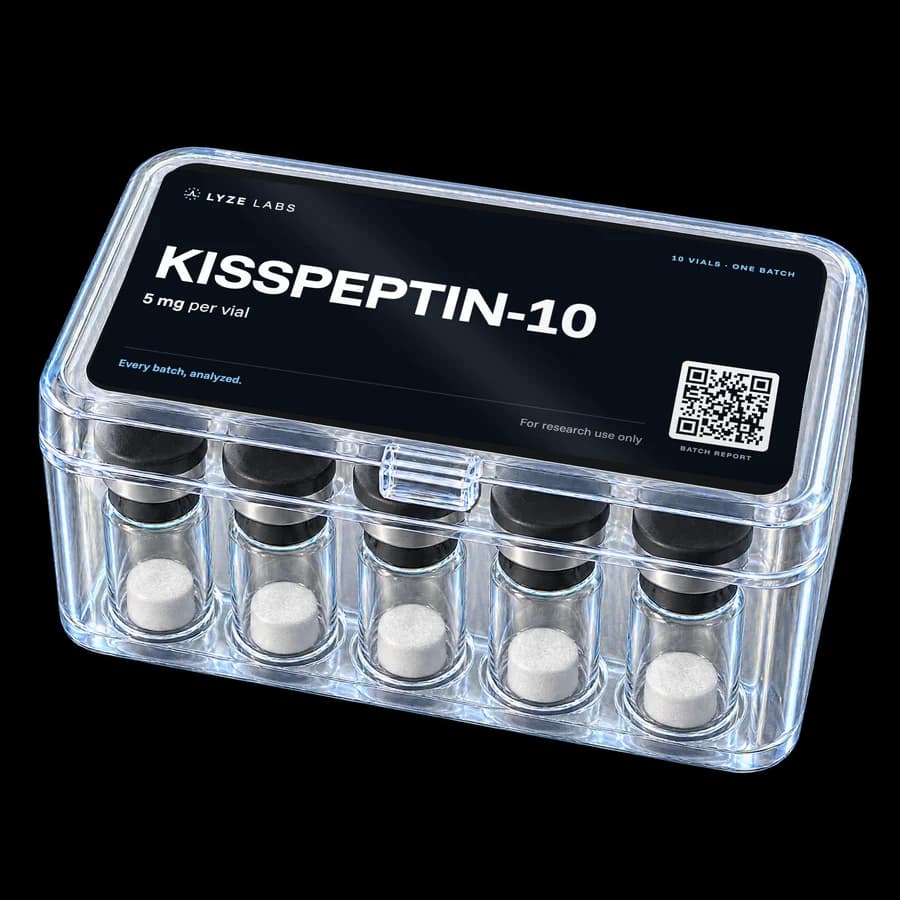
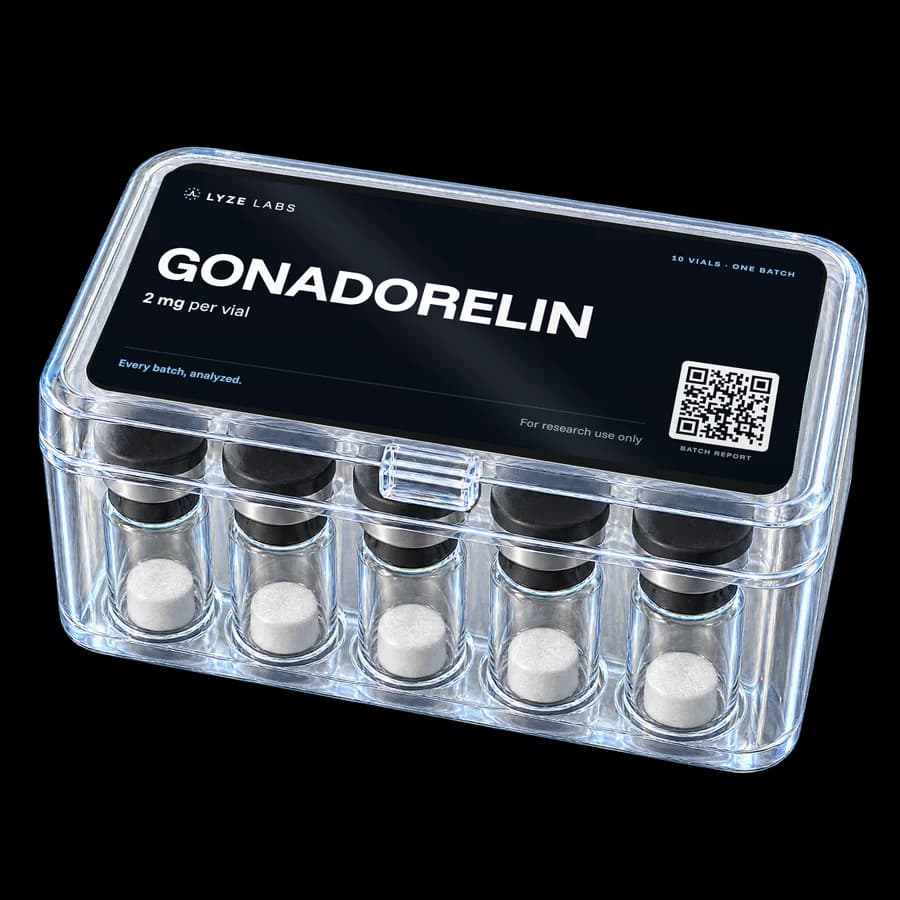
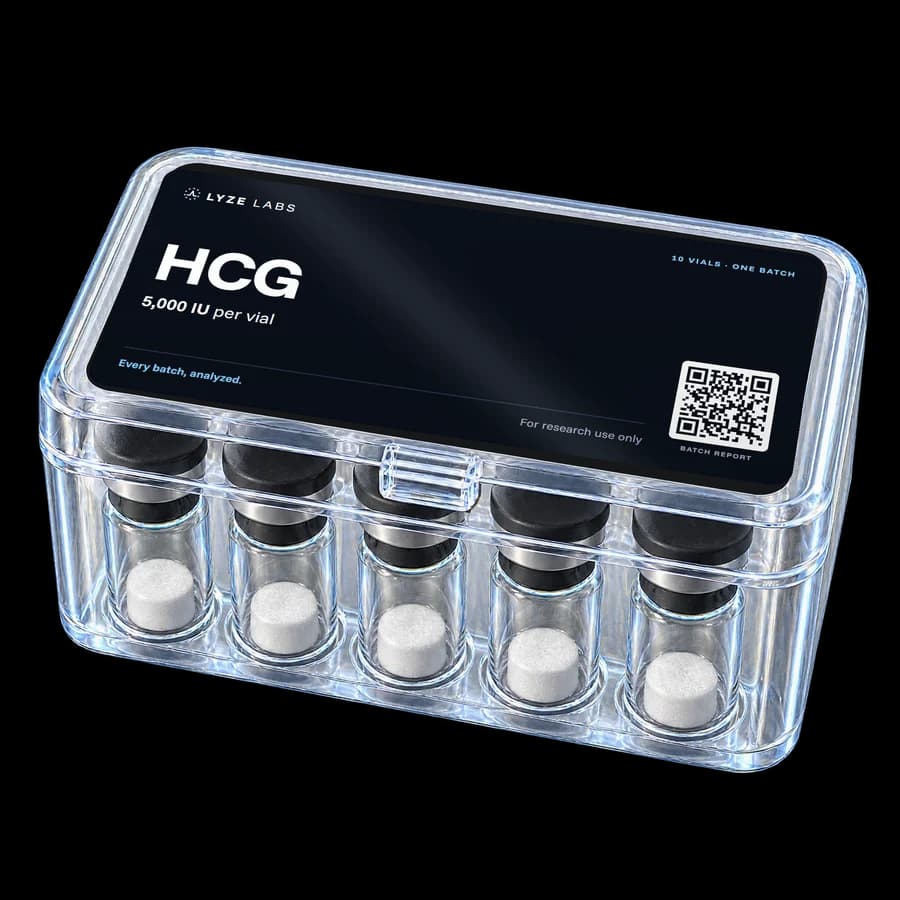
| Our kits | 5 or 10 mg x 10 vials | 2 mg x 10 vials | 5,000 or 10,000 IU x 10 vials |
Which One Fits Which Research Question?
Choose kisspeptin-10 when you want to start the chain from the top: puberty, fertility signals, or how the brain controls reproductive hormones. Because it works through the body's own GnRH, the rest of the chain responds in its own way.
Choose gonadorelin when your question starts at the pituitary: how it responds to GnRH, or how pulse timing changes LH and FSH. Plan for pulses.
Choose HCG when you want to act on the gonads directly, whatever the brain and pituitary are doing, with a signal that lasts days.
Study all three when you want to find where in the chain a problem sits. If HCG works but gonadorelin does not, the problem is in the pituitary. If gonadorelin works but kisspeptin does not, it is in the GnRH neurons above it. That is the logic behind using kisspeptin to test hypothalamic function (Abbara, 2021).
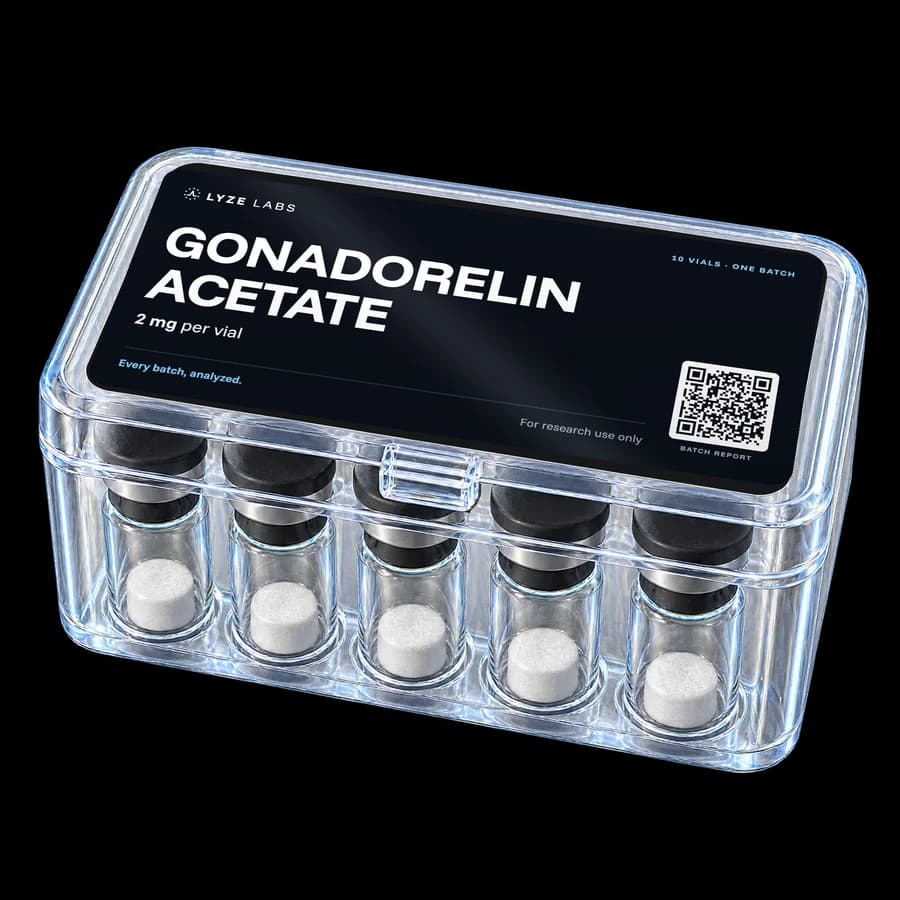
All three come as ten-vial kits: Kisspeptin-10 in 5 or 10 mg, Gonadorelin in 2 mg (also as gonadorelin acetate), and HCG in 5,000 or 10,000 IU.
Handling Differences
All three arrive as freeze-dried powder and mix with bacteriostatic water. HCG is a large, fragile protein: swirl, never shake, and keep it in the fridge. Its math is in IU per mL, not mg. Kisspeptin-10 and gonadorelin are small peptides with standard handling. See how to reconstitute research peptides.
Frequently Asked Questions
What is the difference between kisspeptin and gonadorelin?
Kisspeptin acts one link higher. It switches on the neurons that release GnRH. Gonadorelin is GnRH itself, acting directly on the pituitary. In healthy men, GnRH raised LH and FSH more than kisspeptin did.
Is gonadorelin the same as GnRH?
Yes. Gonadorelin is a lab-made copy with the same 10-amino-acid sequence as natural GnRH.
Why does gonadorelin need to come in pulses?
The pituitary responds to GnRH pulses, about one an hour in the classic monkey study. A steady supply shuts its LH and FSH output down instead.
How is HCG different from kisspeptin and gonadorelin?
HCG acts at the bottom of the chain, on the LH receptor in the testes and ovaries. It does not need the brain or the pituitary, and it lasts days instead of minutes.
Can they be studied together?
Yes. Using all three is a classic way to find which link of the chain is not working, because each one tests a different link.
Studies Cited
- Seminara SB, et al. (2003). The GPR54 gene as a regulator of puberty. New England Journal of Medicine.
- Belchetz PE, et al. (1978). Hypophysial responses to continuous and intermittent delivery of hypothalamic gonadotropin-releasing hormone. Science.
- Jayasena CN, et al. (2015). Direct comparison of the effects of intravenous kisspeptin-10, kisspeptin-54 and GnRH on gonadotrophin secretion in healthy men. Human Reproduction.
- Abbara A, et al. (2015). Efficacy of kisspeptin-54 to trigger oocyte maturation in women at high risk of ovarian hyperstimulation syndrome (OHSS) during in vitro fertilization (IVF) therapy. Journal of Clinical Endocrinology and Metabolism.
- Abbara A, et al. (2021). Kisspeptin-54 accurately identifies hypothalamic gonadotropin-releasing hormone neuronal dysfunction in men with congenital hypogonadotropic hypogonadism. Neuroendocrinology.
- Yeung AC, et al. (2026). Chronic subcutaneous kisspeptin-10 stimulates gonadotropin secretion for 12 days in healthy men. European Journal of Endocrinology.
- Mills EG, et al. (2025). Intranasal kisspeptin administration rapidly stimulates gonadotropin release in humans. eBioMedicine.
- Handelsman DJ, et al. (2024). Single and multi-dose pharmacology of recombinant and urinary human chorionic gonadotrophin in men. Clinical Endocrinology.
This guide is for education. It is not medical advice. Every compound we supply is for laboratory research only and is not for human use.