TB-500 (Thymosin Beta-4): The Complete Research Guide
A complete research guide to TB-500 (Thymosin Beta-4), covering its actin-regulating mechanism, angiogenesis and tissue-repair findings, how it compares to BPC-157, and what defines laboratory-grade quality. Written for global recovery and healing researchers sourcing verified, HPLC-tested material.
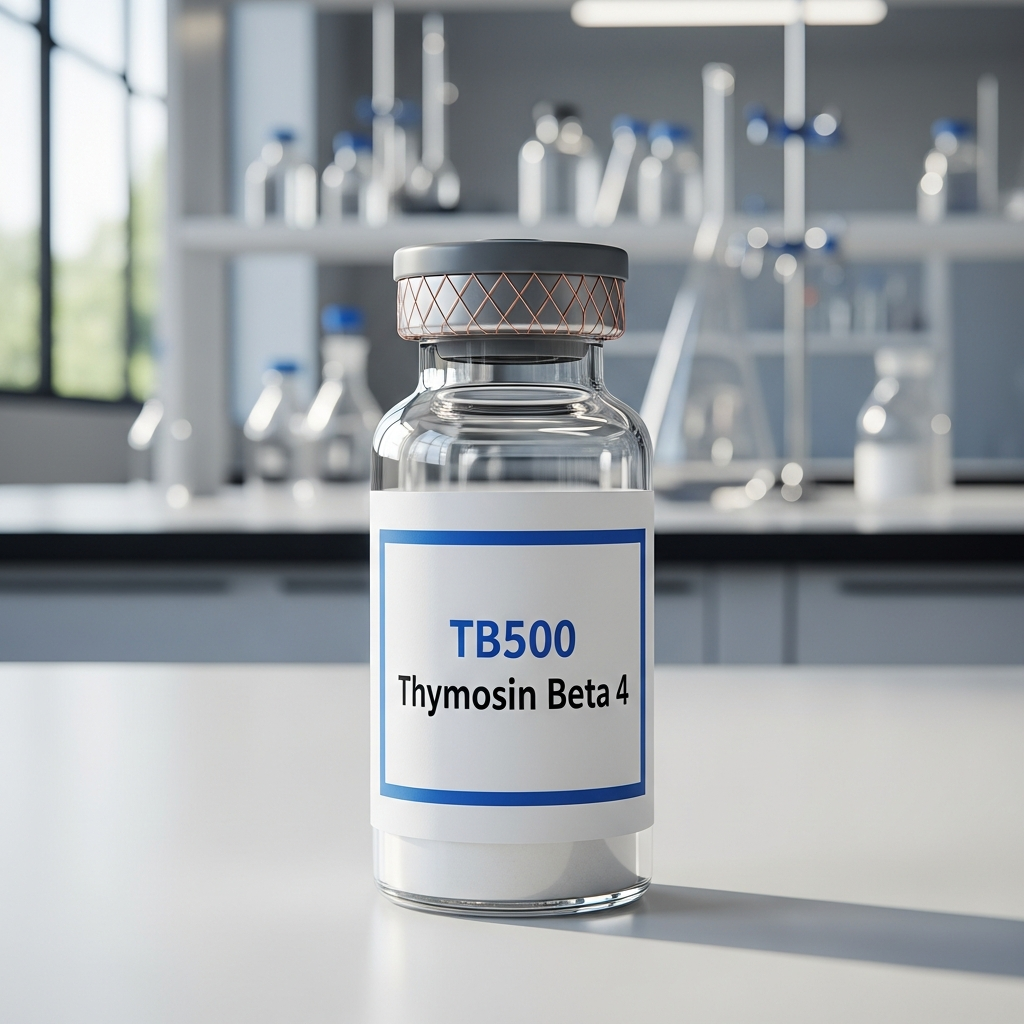
Disclaimer: This article is for educational and informational purposes only. It does not constitute medical advice. All products referenced are intended for research and laboratory use only and are not approved for human consumption.
TB-500 sits at the center of one of the most active conversations in recovery and tissue-repair research. As a synthetic fragment of Thymosin Beta-4, one of the most abundant regulatory peptides found across mammalian cells, it has drawn sustained attention from laboratories studying wound models, angiogenesis, and cellular migration. This guide explains what TB-500 is, the mechanisms researchers are investigating, how it compares to BPC-157, and what separates verified laboratory-grade material from the rest. Everything below is framed strictly for research and laboratory use only.
Key Takeaways
- TB-500 is a synthetic peptide derived from Thymosin Beta-4 (Tβ4), built around the actin-binding domain that contains the conserved LKKTET sequence.
- Its primary studied mechanism is binding G-actin (monomeric actin), which supports the rapid actin polymerization that drives cell migration in tissue-repair models.
- In published research models, Tβ4-related signaling has been associated with upregulated VEGF expression (reported in the range of roughly 2.5 to 3.8 fold), a marker linked to angiogenesis.
- Researchers frequently compare and pair TB-500 with BPC-157 because they are studied through complementary pathways: TB-500 for systemic structural remodeling, BPC-157 for localized repair and microcirculation.
- Laboratory-grade TB-500 should carry a batch-specific Certificate of Analysis (COA) with HPLC purity above 99 percent and mass-spec identity confirmation.
- Lyze Labs supplies pharmaceutical-grade, third-party HPLC-tested TB-500 with free discreet worldwide shipping, trusted by 12,000+ researchers across 150+ countries.
What TB-500 Is and How It Works
TB-500 is a synthetic peptide modeled on Thymosin Beta-4, a naturally occurring 43-amino-acid protein (full Tβ4 carries CAS number 77591-33-4 with a molecular weight near 4,963 g/mol). Tβ4 is one of the most ubiquitous proteins in mammalian cells, originally isolated from the thymus and later identified throughout the body, including in wound fluid and platelets. The full sequence reads SDKPDMAEIEKFDKSKLKKTETQEKNPLPSKETIEQEKQAGES, and the functionally critical region for actin handling is the LKKTET motif.
The core mechanism researchers study is actin regulation. TB-500 binds G-actin, the monomeric form of actin, and helps maintain a reservoir of actin available for rapid polymerization. When cells need to move, such as during the migration phase of a wound-healing model, that available actin pool lets the cytoskeleton reorganize quickly. By modulating these actin dynamics, the peptide has been observed in laboratory settings to facilitate the migration of keratinocytes, endothelial cells, and other repair-associated cell types into a damaged area.
A second major area of interest is angiogenesis, the formation of new blood vessels. In research models, Tβ4-related activity has been associated with increased VEGF (vascular endothelial growth factor) expression, with reported increases in the approximate 2.5 to 3.8 fold range across various cell types. Because new vasculature delivers oxygen and nutrients to repairing tissue, this angiogenic signaling is one of the most cited reasons researchers investigate the compound for tissue-repair questions.
Why Researchers Are Interested in TB-500
The appeal of TB-500 in research circles comes down to its breadth. Preclinical literature has explored Tβ4 and its fragments across a wide range of models, including dermal wound healing, cardiovascular tissue, musculoskeletal injury, and neurological conditions. The recurring theme is repair: promotion of cellular migration, support for angiogenesis, and modulation of the inflammatory phase toward balanced healing rather than runaway inflammation.
Three properties drive most of the laboratory interest:
- Cell migration support, through the actin-binding mechanism described above.
- Angiogenesis signaling, via VEGF-associated pathways observed in research models.
- Inflammation modulation, where Tβ4 has been studied for its role in steering tissue toward an organized repair response.
It is important to be precise about the evidence. Most of the strongest data comes from preclinical and cell-culture models. Human clinical data for TB-500 specifically remains limited, and the compound is not approved as a therapeutic in any jurisdiction. This is exactly why it is classified and sold for research and laboratory use only. Researchers studying flexibility, recovery, and connective-tissue repair treat it as an investigational tool, not a finished intervention.
TB-500 vs BPC-157: Complementary Repair Pathways
No comparison comes up more often than TB-500 versus BPC-157. The two are studied side by side because they appear to act through different, complementary mechanisms rather than competing ones.
In tendon-repair models, BPC-157 has been associated with direct activation of fibroblasts that produce collagen at the repair site, along with support for microcirculation and growth-factor balance. TB-500, by contrast, contributes through actin polymerization and cell migration, helping move repair-associated cells from surrounding tissue into the damaged region. One is often framed as localized and the other as more systemic and structural.
| Attribute | TB-500 (Thymosin Beta-4) | BPC-157 |
|---|---|---|
| Origin | Fragment of Thymosin Beta-4 | Fragment of body-protection compound (gastric) |
| Primary studied mechanism | Actin regulation, cell migration | Fibroblast activation, microcirculation |
| Angiogenesis association | VEGF-linked signaling | Growth-factor and vascular support |
| Often-cited focus | Systemic, structural remodeling | Localized repair, gut models |
| Research framing | Recovery, flexibility, tissue repair | Soft-tissue and incision models |
Because the pathways look complementary, many researchers investigate them together as a blend rather than choosing one. If you want a deeper side-by-side, see our BPC-157 vs TB-500 healing blend guide and the dedicated BPC-157 research guide. Lyze Labs stocks individual TB-500 (Thymosin Beta-4) as well as paired options for researchers designing combination protocols in laboratory settings.
What to Look For in Laboratory-Grade Quality
Recovery research is only as reliable as the material behind it. A peptide that is mislabeled, underdosed, or contaminated introduces variables that quietly ruin an experiment. That is why purity verification is non-negotiable.
The gold standard for TB-500 purity assessment is reverse-phase HPLC. Research-grade material should test above 99 percent purity, with total impurities kept low and no single impurity dominating. Identity should be confirmed by mass spectrometry, so you know the vial actually contains the intended sequence and not a degraded or substituted compound.
A genuine Certificate of Analysis (COA) is the document that ties this together. A real COA is batch-specific, shows the HPLC chromatogram and purity percentage, includes mass-spec identity confirmation, and comes from independent testing rather than a vague in-house claim. If a supplier cannot produce a batch-matched COA on request, treat that as a red flag. Our guide to verifying research peptide purity and COAs walks through how to read these documents line by line, and the research peptide scam red flags breakdown covers the warning signs that separate legitimate suppliers from resellers.
Every Lyze Labs batch of TB-500 is pharmaceutical-grade, third-party HPLC tested, and ships with a COA available per batch confirming purity above 99 percent.
Reconstitution and Storage Notes for Research
In a laboratory setting, TB-500 is typically supplied as a white to off-white lyophilized (freeze-dried) powder. Lyophilized peptide is the most stable form for shipping and storage, which is why it is the standard format.
For research handling, the general principles are straightforward. Lyophilized TB-500 is stored cold and kept away from light and moisture until use. Once reconstituted, usually with bacteriostatic or sterile water in a controlled lab procedure, the solution is kept refrigerated and used within a limited window, because peptides in solution are less stable than the dry powder. Repeated freeze-thaw cycles and exposure to heat are the most common causes of degradation that show up as reduced potency or new impurity peaks on later analysis.
These are research-handling considerations, not human-use instructions. For the full protocol detail, see our how to reconstitute research peptides walkthrough and the peptide storage and stability guide, which cover temperature, solvent choice, and shelf-life questions in depth.
Sourcing TB-500 Globally
Global demand for repair and recovery peptides has surged alongside the broader interest in GLP-1 and longevity compounds, and batch availability for high-purity TB-500 can tighten quickly. Securing current batch pricing while verified inventory is in stock is the practical reality of sourcing in 2026.
Lyze Labs operates as a neutral global supplier, shipping worldwide with free, discreet packaging and typical delivery in 7 to 14 days. Ordering is flexible: WhatsApp is the preferred and fastest channel, and the company also accepts Visa, Mastercard, UPI, PayPal, CashApp, bank or wire transfer, and crypto including BTC, USDT, and ETH. With 12,000+ researchers served across 150+ countries and a per-batch COA on every order, the focus is on consistency and verifiable quality. Researchers comparing recovery compounds may also find our CJC-1295 and Ipamorelin stack guide useful when planning broader protocols.
Frequently Asked Questions
What is TB-500 used for in research?
TB-500 is studied for tissue-repair and recovery models, with the main research interest centered on cellular migration, angiogenesis, and inflammation modulation. It is investigated strictly in laboratory and preclinical settings, not as an approved human therapeutic. Researchers focused on flexibility and connective-tissue repair use it as an investigational tool.
How does TB-500 differ from Thymosin Beta-4?
TB-500 is a synthetic peptide built around the active, actin-binding region of the full 43-amino-acid Thymosin Beta-4 protein. It retains many of the parent molecule's studied biological activities, including support for tissue repair and angiogenesis, while being more practical to synthesize and handle in a lab. In short, Tβ4 is the full natural protein and TB-500 is the research-focused fragment.
Is TB-500 better than BPC-157?
Neither is simply better; they are studied through complementary pathways. TB-500 is associated with systemic structural remodeling through actin regulation and cell migration, while BPC-157 is linked to localized repair, fibroblast activation, and microcirculation. Many researchers investigate them together as a blend rather than choosing one over the other.
How do I verify TB-500 purity and quality?
Look for reverse-phase HPLC purity above 99 percent confirmed on a batch-specific Certificate of Analysis, plus mass-spec identity confirmation from independent testing. The COA should match the exact batch you receive, not a generic sample. A supplier that cannot provide a batch-matched COA on request should be avoided.
How should TB-500 be stored in a laboratory?
Lyophilized TB-500 powder is kept cold, dry, and away from light until use, which preserves long-term stability. After reconstitution in a controlled lab procedure, the solution is refrigerated and used within a limited window, and repeated freeze-thaw cycles are avoided. Proper storage is what protects the purity confirmed on the original COA.
Does Lyze Labs ship TB-500 worldwide?
Yes. Lyze Labs ships TB-500 globally with free, discreet packaging and typical delivery in 7 to 14 days. Orders can be placed via WhatsApp, the fastest channel, with payment by card, UPI, PayPal, CashApp, bank or wire transfer, and crypto. Every order includes a per-batch COA confirming purity above 99 percent.
Ready to Source Verified TB-500
If you are running recovery or tissue-repair research, start with material you can verify. Lyze Labs supplies pharmaceutical-grade, HPLC-tested TB-500 (Thymosin Beta-4) with a COA on every batch and free worldwide shipping. Message us on WhatsApp to confirm current batch availability and lock in present pricing while verified inventory is in stock.
Related Research Guides
BPC-157 vs TB-500: Why Recovery Labs Use Both (And When a Blend Beats a Single Compound)
They do not do the same thing. They do adjacent things. Here is why recovery research protocols almost always stack them, and when a blend is the right call instead of two separate vials.

BPC-157: The Research Peptide Every Recovery Lab Has on the Shelf
Fifteen amino acids, originally isolated from human gastric juice, and the single most reached-for peptide in tissue repair research. This is BPC-157 done properly.

How to Choose a Research Peptide Supplier: The 2026 Verification Checklist
A practical 2026 framework for choosing a research peptide supplier: lot-matched HPLC COAs, mass-spec identity, batch transparency, and the verification steps that separate a legit peptide source from a forged one.