Comparisons
Survodutide vs Mazdutide vs Retatrutide: Two Receptors or Three?
Survodutide and mazdutide act on GLP-1 and glucagon receptors; retatrutide adds GIP. What each trial found, where each one stands, and which fits which research question.
Lyze Labs Research Team · Updated · 6 min read
In this guide
Survodutide, mazdutide and retatrutide all act on the glucagon receptor as well as GLP-1, which is what sets them apart from semaglutide and tirzepatide. Survodutide and mazdutide stop at two receptors. Retatrutide adds a third, GIP. So far retatrutide has the biggest weight-loss numbers, survodutide the strongest liver data, and mazdutide is the only one approved anywhere (China, 2025).
The Short Answer
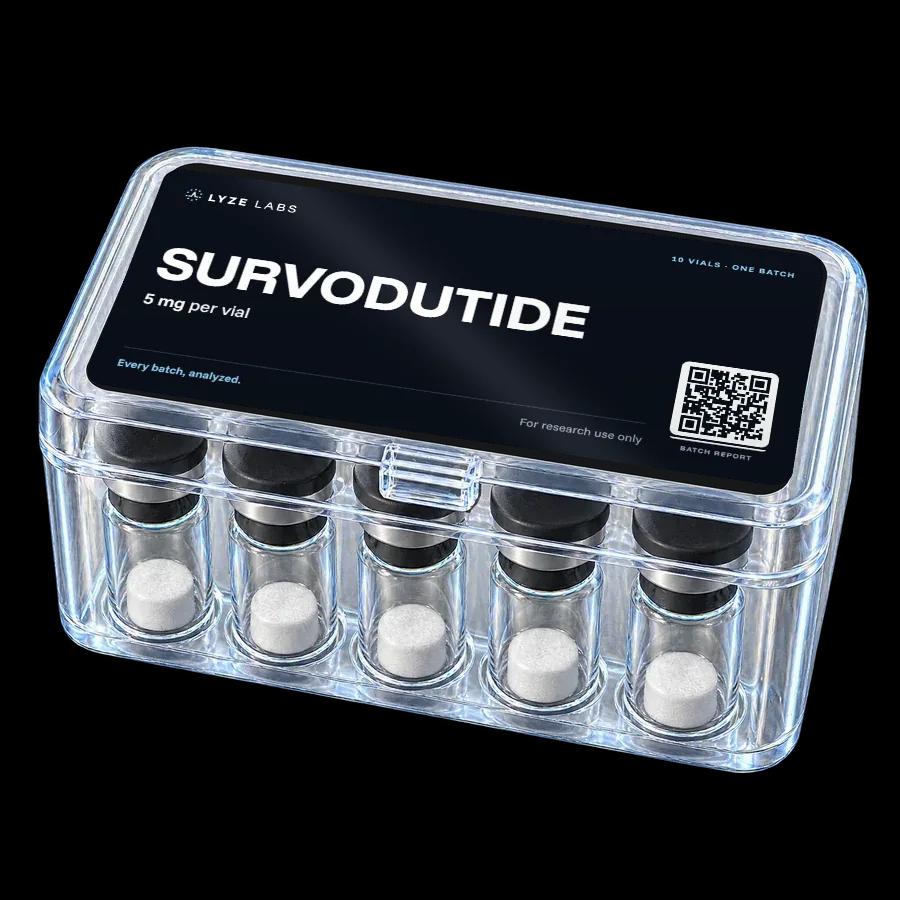
- Survodutide (BI 456906, Boehringer Ingelheim) acts on GLP-1 and glucagon receptors. Its first phase 3 obesity trial, SYNCHRONIZE-1, reported up to 16.6% average weight loss at 76 weeks in April 2026. In a phase 2 liver trial, fatty liver disease improved in up to 62% of participants, against 14% on placebo.
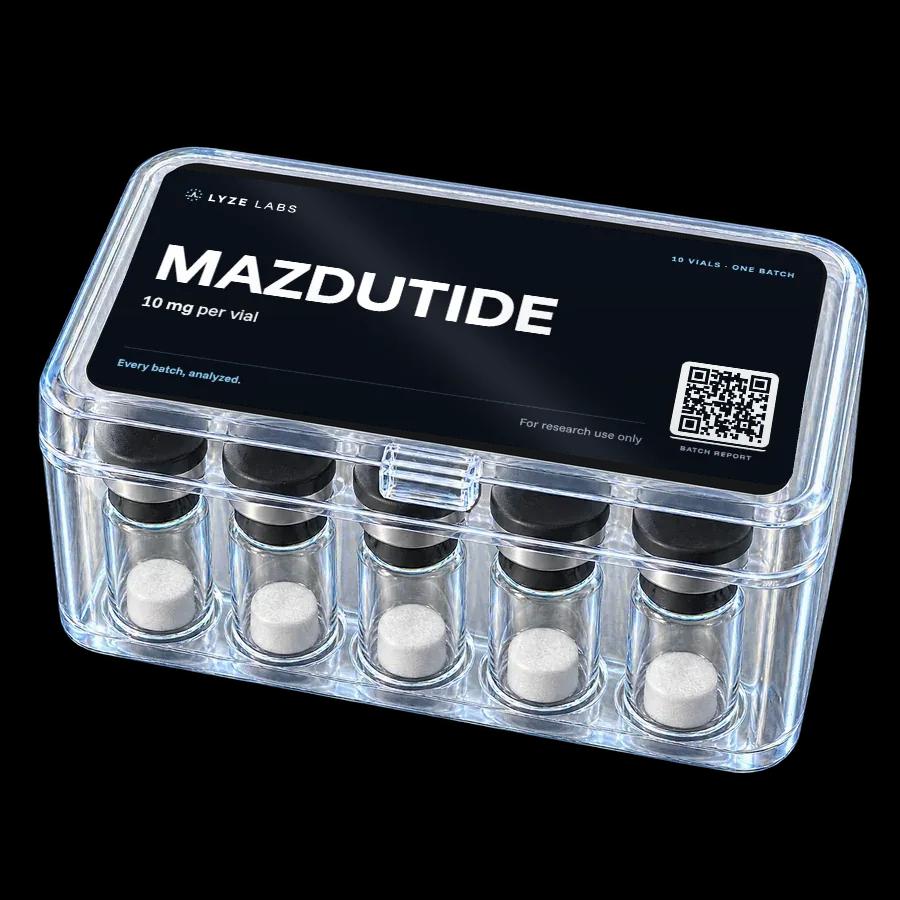
- Mazdutide (LY3305677, also IBI362; Eli Lilly and Innovent) also acts on GLP-1 and glucagon receptors. In the phase 3 GLORY-1 trial, average weight loss reached 14.0% at 48 weeks in the higher-strength group. China approved it in June 2025.
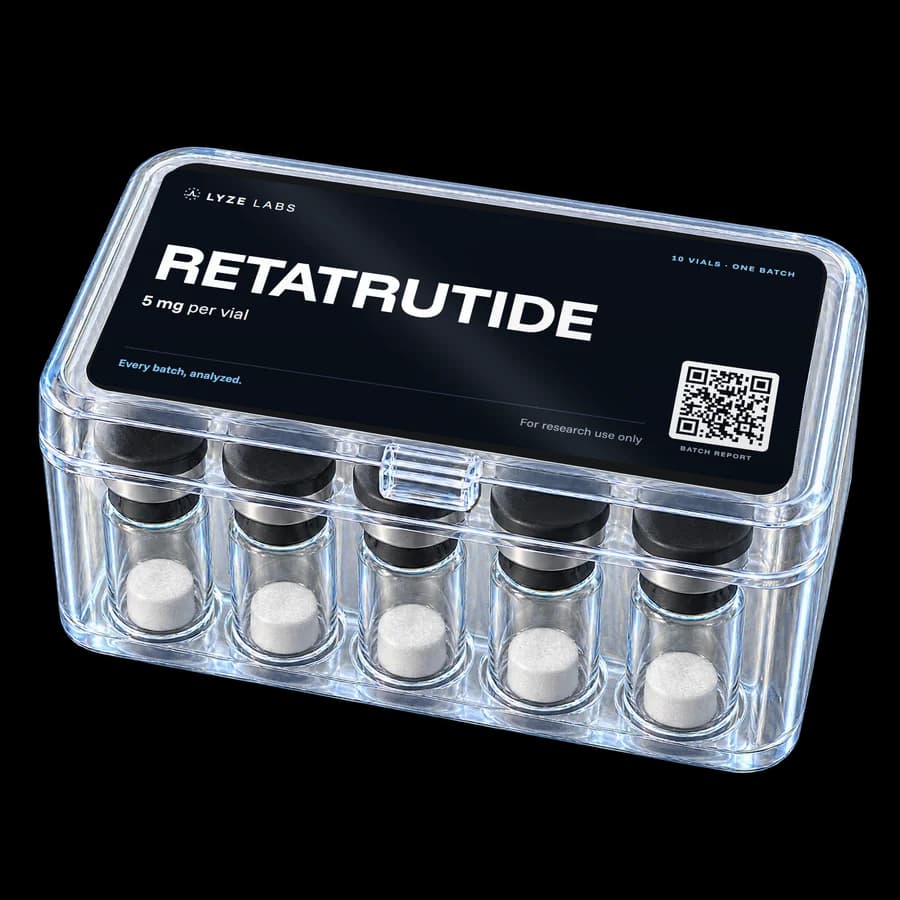
- Retatrutide (LY3437943, Eli Lilly) acts on three receptors: GLP-1, GIP and glucagon. In the phase 3 TRIUMPH-1 trial, average weight loss ranged from 17.6% to 25.0% at 80 weeks, against 3.9% on placebo.
Why Glucagon?
GLP-1 lowers appetite: people eat less. Glucagon works on the other side of energy balance. It raises the energy the body burns and makes the liver use more fat. Pairing the two is meant to cut weight from both ends, and it is why all three compounds are studied for fatty liver disease as well as obesity.
The catch is balance. Glucagon also raises blood sugar, which the GLP-1 signal counters, so the mix of the two matters in how each molecule is designed. GIP, retatrutide's third receptor, is the one tirzepatide adds to GLP-1.
How Each One Works
Survodutide
Survodutide is a lab-made peptide that switches on GLP-1 and glucagon receptors. Boehringer Ingelheim built it to last a week in the body. In its phase 2 obesity trial, weight fell up to 14.9% over 46 weeks, against 2.8% on placebo (le Roux, 2024). Its liver trial is the standout: MASH, the inflamed form of fatty liver disease, improved without worse scarring in up to 62% of participants, against 14% on placebo (Sanyal, 2024). A heart-outcomes trial, SYNCHRONIZE-CVOT, plans to enrol 4,935 people (Kosiborod, 2024).
Mazdutide
Mazdutide is related to oxyntomodulin, a gut hormone that acts on GLP-1 and glucagon receptors at the same time. In the phase 3 GLORY-1 trial in China, average weight loss at 48 weeks was 11.0% and 14.0% in its two groups, against a 0.3% gain on placebo (Ji, 2025). China approved it for weight management in June 2025 and for type 2 diabetes in September 2025 (Shirley, 2025). Eli Lilly holds the rights outside China.
Retatrutide
Retatrutide adds GIP to the pair, which is why it is called a triple agonist. In lab tests it is about equally active at the glucagon and GLP-1 receptors and more active at GIP (Coskun, 2022). Its phase 2 trial reported 24.2% average weight loss at 48 weeks in the top group, against 2.1% on placebo (Jastreboff, 2023). The phase 3 TRIUMPH-1 trial in 2,339 adults followed with 17.6% to 25.0% at 80 weeks (Jastreboff, 2026). See the retatrutide page for more.
Side-by-Side Comparison
| Feature | Survodutide | Mazdutide | Retatrutide |
|---|---|---|---|
| Receptors | GLP-1, glucagon | GLP-1, glucagon | GLP-1, GIP, glucagon |
| Developer | Boehringer Ingelheim | Eli Lilly, Innovent | Eli Lilly |
| Research code | BI 456906 | LY3305677, IBI362 | LY3437943 |
| Phase 3 weight result | Up to 16.6% at 76 weeks | 14.0% at 48 weeks | Up to 25.0% at 80 weeks |
| Liver data | MASH improved in up to 62% (phase 2) | Being studied in fatty liver disease | Liver fat studied (phase 2a) |
| Status (November 2026) | Phase 3 | Approved in China | Phase 3 |
| Our kits | 5, 10, 15 mg x 10 vials | 10 mg x 10 vials | 5 to 60 mg x 10 vials |
The weight numbers come from different trials, with different lengths and different people. They are not a head-to-head comparison.
Which One Fits Which Research Question?
Choose survodutide when the question is about the liver: liver fat, MASH or scarring. It has the most liver data of the three.
Choose mazdutide when you want the two-receptor compound with an approved status and large published trials, including one in type 2 diabetes (Nature, 2026).
Choose retatrutide when the question is the size of the effect, or what GIP adds on top of GLP-1 and glucagon.
Use two or all three to separate the receptors: survodutide or mazdutide against retatrutide isolates the effect of GIP, the one receptor they do not share.
Each comes as a ten-vial kit: survodutide in 5, 10 or 15 mg, mazdutide in 10 mg and retatrutide in 5 to 60 mg.
Handling
All three arrive as freeze-dried powder and are mixed with bacteriostatic water. Keep sealed vials in the freezer and mixed vials in the fridge. The reconstitution how-to covers the method.
Frequently Asked Questions
Which is strongest: survodutide, mazdutide or retatrutide?
In trials so far, retatrutide has the largest average weight loss, up to 25.0% at 80 weeks in TRIUMPH-1. The trials differ in length and population, so the numbers are not a direct comparison.
Are survodutide and mazdutide the same?
No. Both act on GLP-1 and glucagon receptors, but they are different molecules from different companies. Survodutide is from Boehringer Ingelheim; mazdutide from Eli Lilly and Innovent.
Is any of them approved?
Mazdutide is, in China: for weight management since June 2025 and for type 2 diabetes since September 2025. Survodutide and retatrutide are investigational as of November 2026.
What does glucagon add to GLP-1?
GLP-1 lowers appetite. Glucagon raises the energy the body burns and makes the liver use more fat. Together they work on both sides of energy balance.
Why is retatrutide called a triple agonist?
Because it switches on three hormone receptors: GLP-1, GIP and glucagon. Survodutide and mazdutide switch on two.
Studies Cited
- le Roux CW, et al. (2024). Glucagon and GLP-1 receptor dual agonist survodutide for obesity: a randomised, double-blind, placebo-controlled, dose-finding phase 2 trial. The Lancet Diabetes & Endocrinology.
- Sanyal AJ, et al. (2024). A Phase 2 Randomized Trial of Survodutide in MASH and Fibrosis. New England Journal of Medicine.
- Kosiborod MN, et al. (2024). Survodutide for the Treatment of Obesity: Rationale and Design of the SYNCHRONIZE Cardiovascular Outcomes Trial. JACC: Heart Failure.
- Ji L, et al. (2025). Once-Weekly Mazdutide in Chinese Adults with Obesity or Overweight. New England Journal of Medicine.
- Ji L, et al. (2023). A phase 2 randomised controlled trial of mazdutide in Chinese overweight adults or adults with obesity. Nature Communications.
- Shirley M (2025). Mazdutide: First Approval. Drugs.
- Coskun T, et al. (2022). LY3437943, a novel triple glucagon, GIP, and GLP-1 receptor agonist for glycemic control and weight loss: From discovery to clinical proof of concept. Cell Metabolism.
- Jastreboff AM, et al. (2023). Triple-Hormone-Receptor Agonist Retatrutide for Obesity - A Phase 2 Trial. New England Journal of Medicine.
- Jastreboff AM, et al. (2026). Retatrutide, a Triple Hormone Receptor Agonist, for Treatment of Obesity. New England Journal of Medicine.
- Sanyal AJ, et al. (2024). Triple hormone receptor agonist retatrutide for metabolic dysfunction-associated steatotic liver disease: a randomized phase 2a trial. Nature Medicine.
This guide is for education. It is not medical advice. Every compound we supply is for laboratory research only and is not for human use.